
Vermont artist Alice Standish Buell was an activist. In the early 1920s, before she devoted her life to art, she had a successful career in social work, fighting for the welfare of families, women, and children. She advocated for the passage of the Equal Rights Amendment when it was originally introduced in 1923. Art and activism often go hand in hand. They require the same creativity, awareness, and deep dedication. Standish Buell had a deep dedication to justice for her fellow women, for children, and those who lacked privilege. She was also deeply dedicated to her adopted home state, Vermont.
During her lifetime (1892–1960), she and her husband lived in Chicago, New York City, New Orleans, Sanibel Island (Florida), and elsewhere, but all the while they spent their summers in Woodstock, Vermont. Eventually, in 1932, they purchased the “Old Slocum Farm” in North Bridgewater, and for the next 26 years they became more than just others’ summer guests. Standish Buell had been born and raised in a suburb of Chicago, but her father’s family came from Benson, Vermont. Childhood visits may have sparked her love of the state, and it was well suited to her lifestyle as an artist. With the availability of farms and land for sale in the aftermath of the Depression, summer colonies of artists, musicians, and writers sprang up in and around Woodstock.
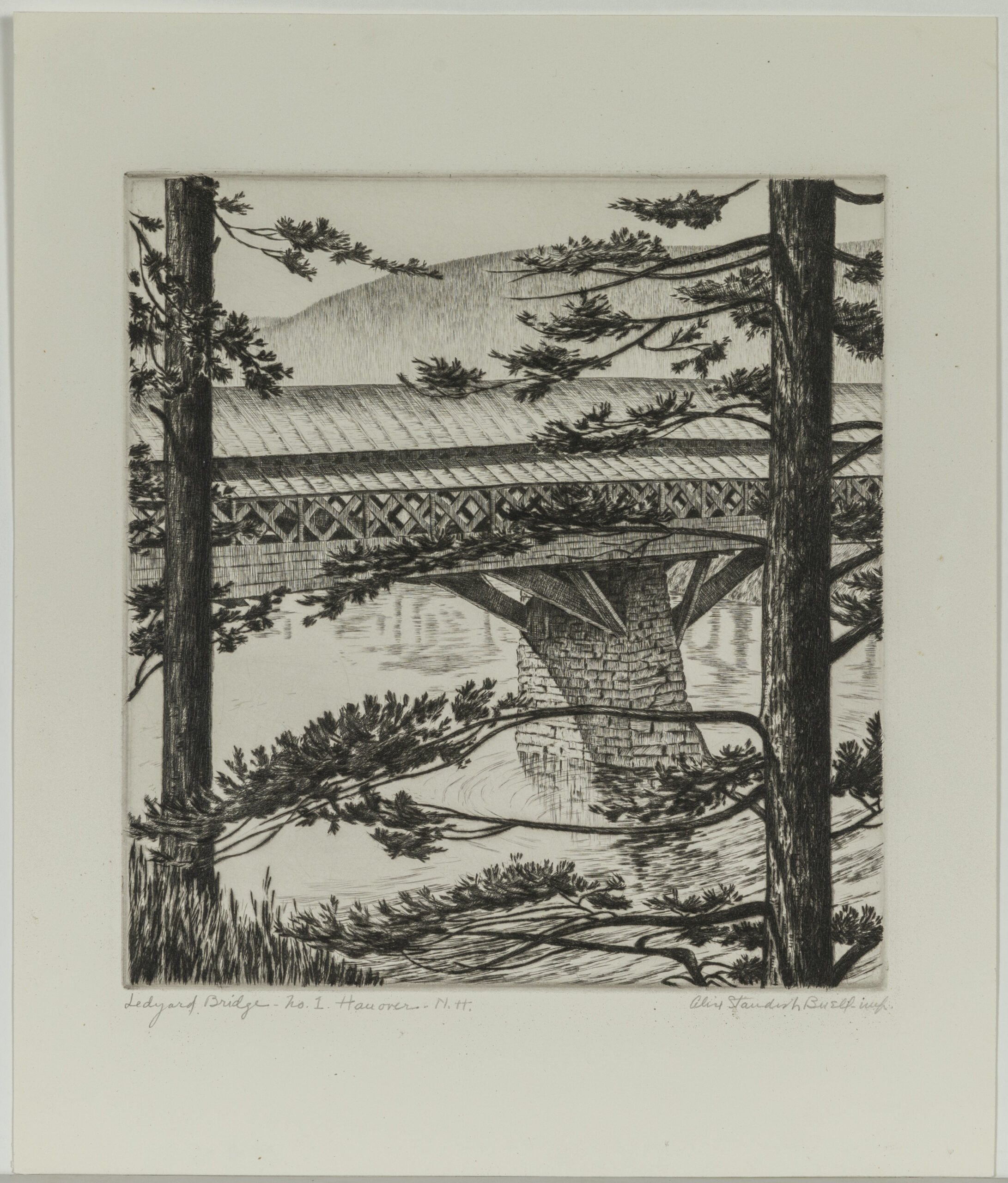
While immersed in this inspiring landscape and artistic community, Standish Buell honed her craft as a printmaking artist, working in drypoint, etching, and woodcut. Her regionalist works depict local barns, bridges, and farm scenes, as well as stately buildings from the nearby Dartmouth College campus. In addition, she illustrated The Woodstock Cook Book and created maps of the area, with residents listed by name and their homes featured in tiny, intricate detail. Her love of Woodstock and Bridgewater leaps off the page in her work from this period.
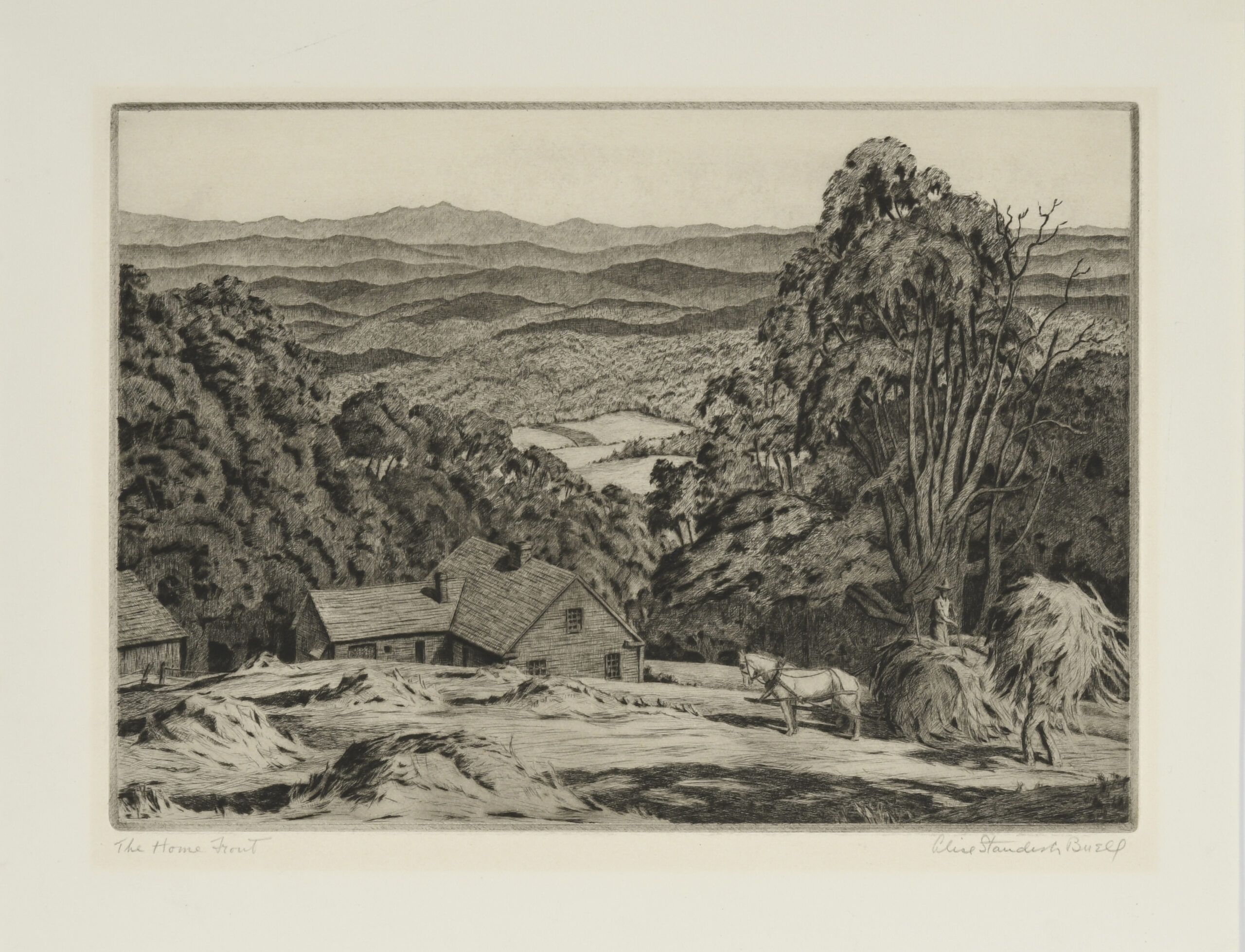
She learned to create the art that would make her name through various means, including private study with Martin Lewis and full-time studies at the Art Students League in New York City from 1923 to 1925 under George B. Bridgman, H. E. Schankenberg, Edmund F. Ward, and Allen Lewis. She studied drypoint with Elbridge “Gerry” Pierce at the New Orleans Art School in 1926, and by 1928, she was teaching printmaking at the same institution. Years after her death, her husband and fellow social worker Bradley honored her drypoint skills, noting that it was “the medium … that best cited her talents — masterful craftsmanship plus a genuinely creative sympatico for the subtlest matter of her choice.” She illustrated architectural scenes in New Orleans during her time there, as well as creating a historical map of that city as it had been in 1803. She also later mapped her longtime winter home of Sanibel Island. Wherever she went, she immersed herself in the community and showed that immersion through her creative work.
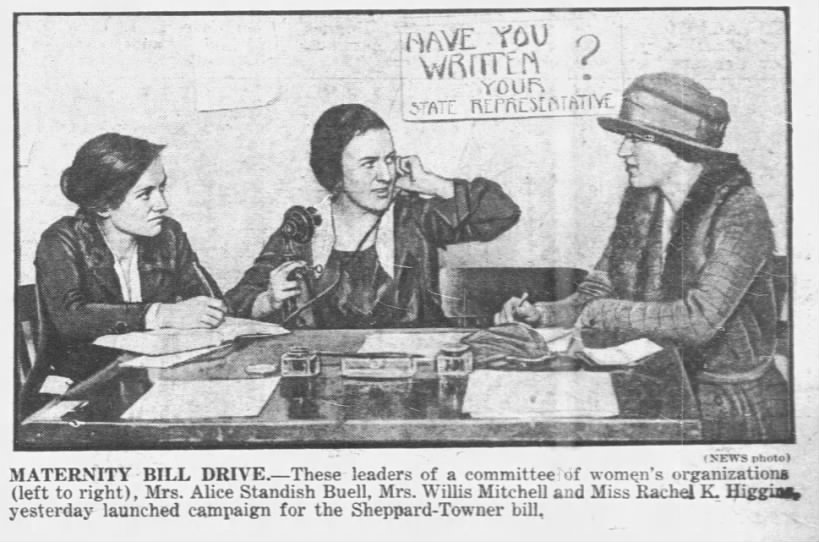
Her social work likely influenced that commitment to community. In her early years, she had been an active member of the Women’s Joint Congressional Committee, which lobbied for passage of the National Maternity and Infancy Protection Act in 1921. She was a member of the National American Suffrage Association, the American Civil Liberties Union, and the Sacco and Vanzetti Defense Committee. She worked as a field organizer for the Ohio Suffrage Association and the New York State Consumers League. Her keen artist’s eye saw the interplay of light and shadow on buildings and landscapes, just as her undaunted social worker’s heart witnessed the injustice around her and sought to address it. She also participated on the boards of various arts organizations, including the Art Students League, the Pen and Brush Club, the National Association of Women Artists, and the Artists Equity Association.
Standish Buell died in New York City in 1960 after a long illness. Her obituary in the Associated Press noted that she was “one of America’s well-known women artists; exhibited at major museums around the nation; and was an outstanding etcher.” Even after her death, her activism continued in the form of two awards established in her name to support women artists. The National Association of Women Artists gave the Alice Standish Buell Memorial Award for Graphics to honorees during the 1960s and ’70s. Standish Buell’s husband established another award in her name, which was given annually starting in 1960 at the Graphics and Drawing Exhibition of the Pen and Brush Club. In its members’ own words, “For over 130 years, Pen and Brush has been the only international nonprofit organization providing a platform to showcase the work of professional emerging and mid-career female artists and writers to a broader audience.” The club that gave an award in her name still carries on the work of improving life for women in the arts.
Standish Buell’s work is included in the collections of the Museum of Modern Art (New York), the Whitney Museum of American Art (New York), the Pennsylvania Academy of the Fine Arts, the Currier Museum of Art (New Hampshire), the High Museum of Art (Georgia), the Metropolitan Museum of Art (New York), and other institutions. But her impact goes far beyond where her work appears to this day. Throughout her life and even in death, Alice Standish Buell was dedicated to honoring women and helping them advance in life and art. That is the legacy of an activist.