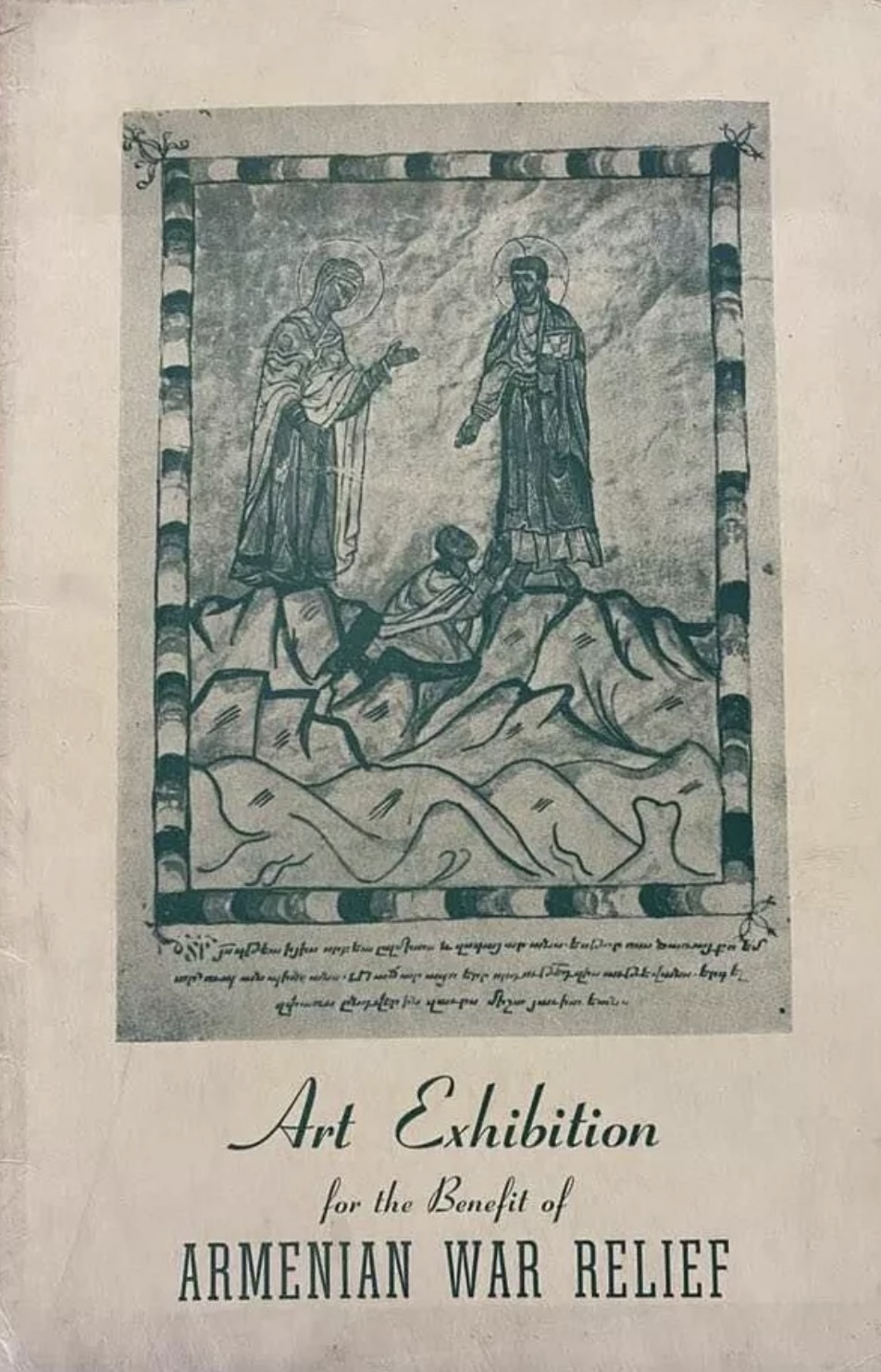
 In the daily pursuit of uncovering the varied and often elusive connections of the League, I stumbled upon a fascinating catalogue from 1942—an art exhibition held at the League from October 19 to November 7, organized for the benefit of Armenian War Relief. My curiosity was immediately piqued by the mere mention of the word “Armenian,” as I was not familiar with many Armenian artists beyond the renowned Arshile Gorky (1904–1948).
This discovery prompted me to share the find with our very own historian and archivist-at-large, Stephanie Cassidy, who was equally intrigued by the possibility of Gorky’s involvement in the exhibit. Together, we dove deeper to unravel the story behind the exhibition and its connection to Gorky.
With his birthday approaching on April 15 and Armenian Genocide Remembrance Day on April 24, it feels especially timely to reflect on Arshile Gorky—his life, his art, and his direct and indirect connections with the Art Students League of New York.
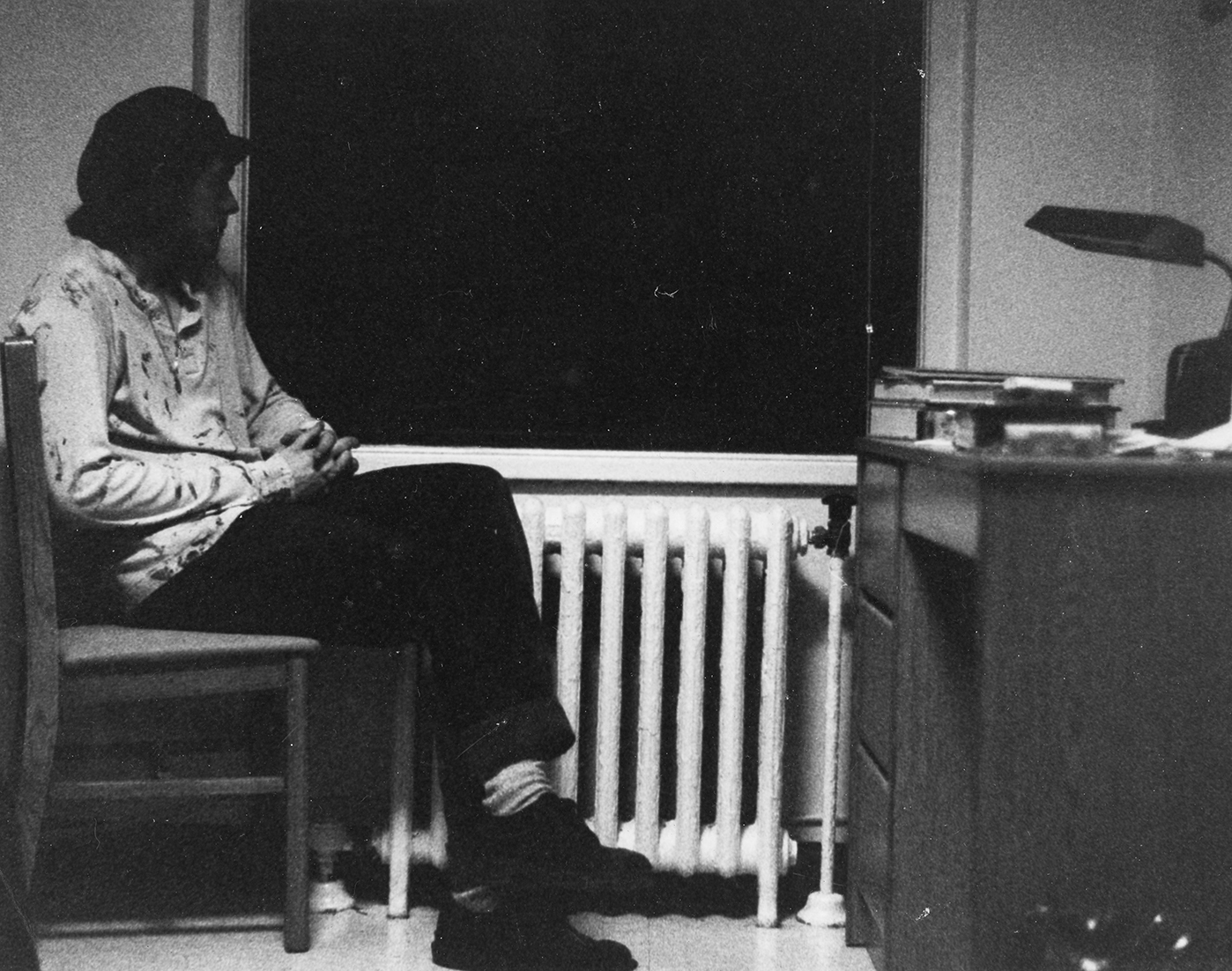
Despite a life cut short by illness and tragedy, Gorky played a pivotal role among his contemporaries, including many League artists such as Mark Rothko and Jackson Pollock. He had particularly close relationships with fellow League artists John Graham and Stuart Davis, with whom he formed a trio famously referred to as “The Three Musketeers.” Gorky’s work often mirrored the modernist tendencies of his companions, and his stylistic evolution reflects this camaraderie.
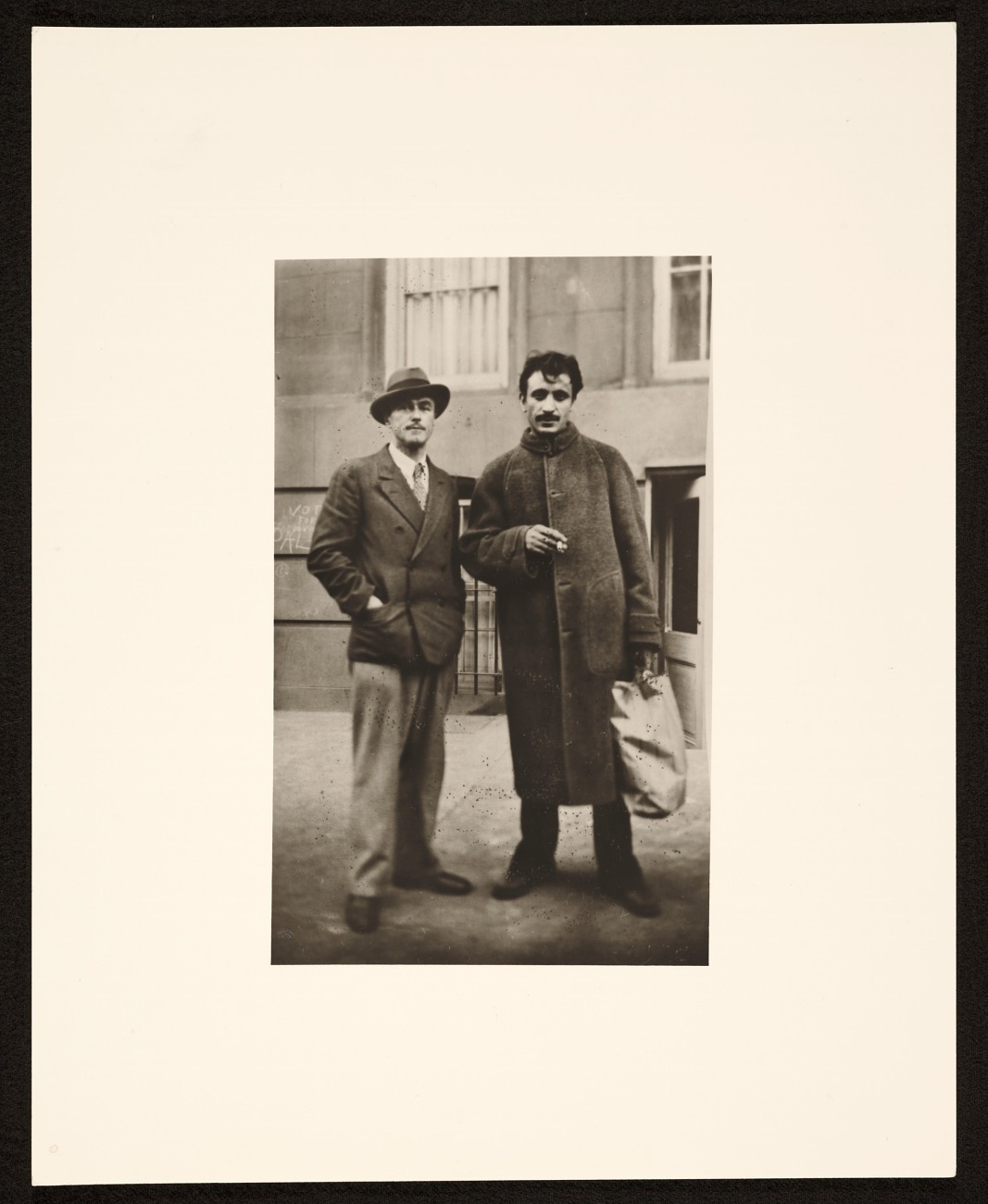
He also maintained close ties with two other League-affiliated artists—sculptors Raoul Hague (1905–1993) and Reuben Nakian (1897–1986)—both of Armenian descent.
Often described as a bridge between Surrealism and Abstract Expressionism, Gorky was revered by peers such as Willem de Kooning. In De Kooning: An American Master (Knopf, 2004), Mark Stevens and Annalyn Swan describe Gorky’s influence on de Kooning, who regarded him as a mentor and introduced him to League student Agnes Magruder, who was then known by the name Pia. Gorky and Magruder later married, despite an age difference of over twenty years.
Gorky’s Armenian identity and the trauma of the 1915 genocide deeply impacted his work. His emotional bond with his mother, who died of starvation, and his memories of his homeland echo through several of his most poignant pieces—perhaps most famously in The Artist and His Mother (1926–c. 1936).
Fittingly, on April 24, 1985—Armenian Genocide Remembrance Day—trees were planted and a plaque was affixed at the northeast corner of Union Square, near 36 Union Square, where Gorky first rented a studio in 1930 and remained until his death.
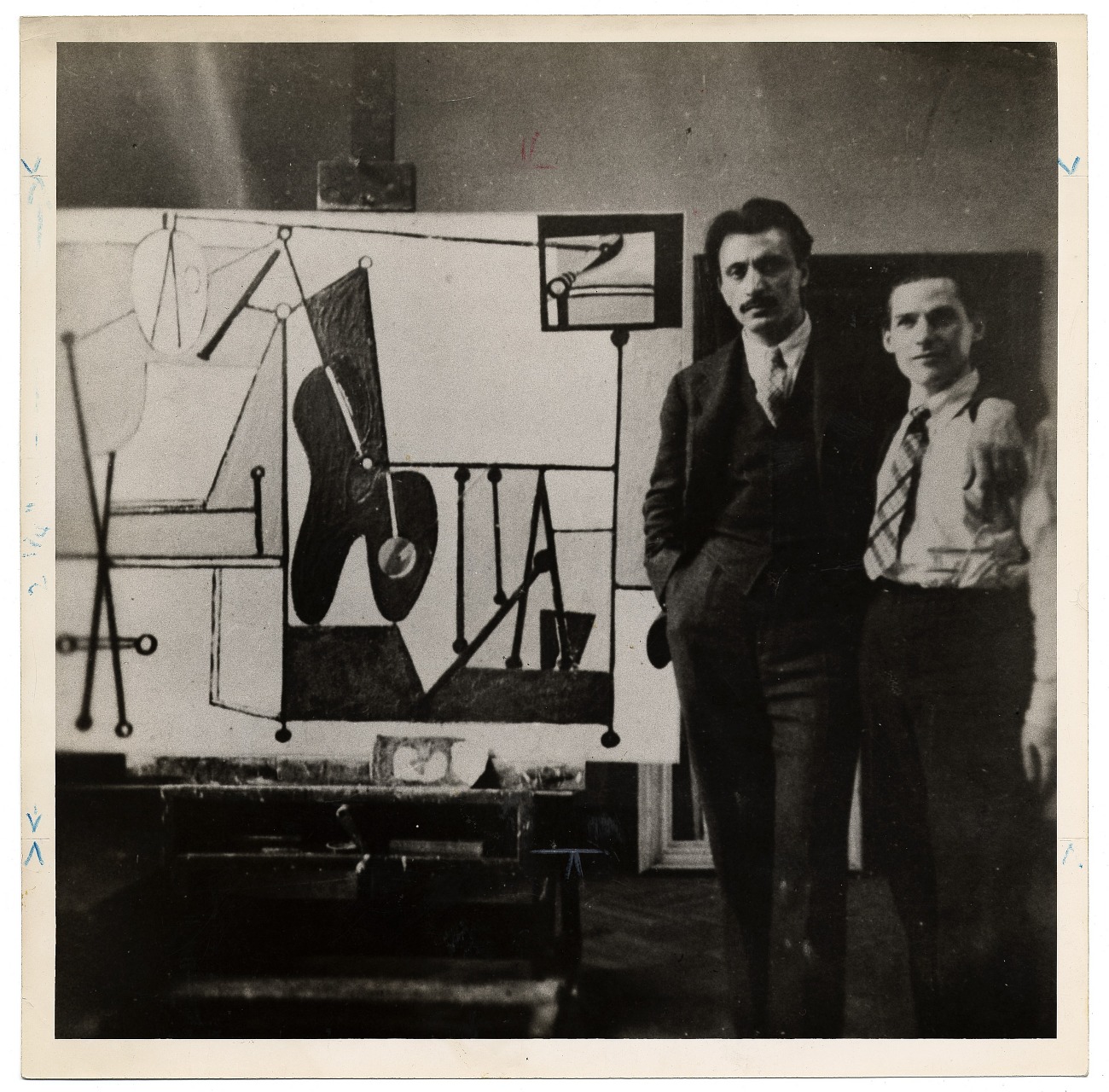
Returning to the enigmatic 1942 exhibition catalogue, we found documentation in the form of a solicitation letter dated September 25, 1942, addressed to League artist Rockwell Kent. The letter requested contributions for an exhibition benefiting Armenian War Relief, not to be confused with the Armenian Relief Society, founded in 1910. The event featured works from the private collection of Haroutune Hazarian, an officer of Armenian War Relief and a longtime acquaintance of Gorky’s dating back to the 1920s.
Given the cause, one deeply personal to him, it’s no surprise that Gorky contributed two works at Hazarian’s request: Head (oil, 1930–31; catalogue #227) and Summer in Sochi, Black Sea (1936; catalogue #234). What happened next became the stuff of art world lore. Hazarian purchased both pieces for a mere five dollars each—an act that infuriated Gorky, who unsuccessfully attempted to buy them back. His final word to the organizers: “Never again.” (See Hayden Herrera’s Arshile Gorky: His Life and Work.) Decades later, Head, reappeared at Sotheby’s in May 2019 (Lot 193) with a pre-auction estimate of $200,000–$300,000. It went unsold.
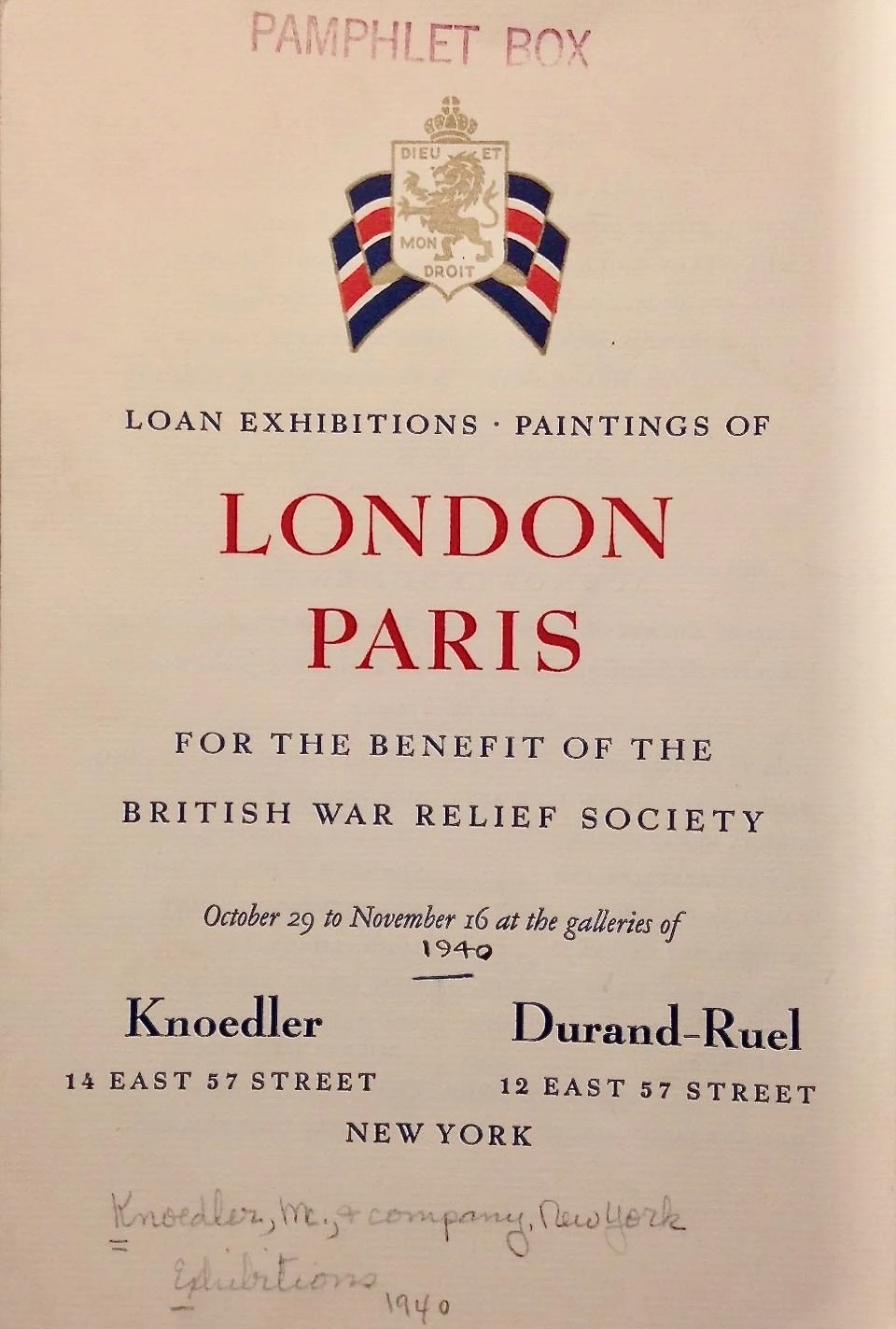 The 1942 exhibition reflected a broader wartime spirit in which galleries across the country organized fundraisers for various relief efforts. The League joined this movement, hosting events to support causes such as The British War Relief Society, Red Cross War Relief Fund, or the purchase of United States War Bonds—as reflected in announcements and materials from that era.
As an aside, the acclaimed art historian Hayden Herrera—author of Gorky’s biography—also penned a memoir, Upper Bohemia (Simon & Schuster, 2021), in which she recounts her upbringing as the child of two League-trained artists: John Charles Phillips (a descendant of the founders of Phillips Exeter Academy) and Elizabeth Cornell Blair (a descendant of the founders of Cornell University). After her parents’ divorce, her father married Gorky’s widow, Mougouch (Agnes Magruder), and they were together for ten years.
On the occasion of what would be Arshile Gorky’s 121st birthday, we honor an artist whose legacy transcends his brief life. His influence on fellow League artists and the broader world of modern art is profound, and his contributions—both personal and artistic—continue to leave an indelible mark on the League’s history.