
At what age did you decide to become an artist?
I was always making things. I grew up in a house with an endless supply of materials. My mother lived through the depression, so everything was saved. Some of my strongest aesthetic influences came from objects around the house: I spent hours intrigued by the variety of shapes and highly textured designs of Bakelite buttons from the thirties and forties, which filled an old metal honey can.
My father was a physician whose office was in our home, so pharmaceutical samples arrived daily, which covered the dining room table. I became intensely fascinated with their packaging and the tactility of the positive and negative molded styrofoam and plastic forms, which I used to create three-dimensional projects. I was also absorbed in the creative process of deconstructing and redesigning vintage clothing and jewelry.
I began sculpting in high school, in summer programs, continued in college, studied sculpture in Italy, and then at the League in the seventies and eighties. I also restored sculpture and made props for TV commercials and for print to support myself. But it wasn’t until I attended Skowhegan in the summer of 1985, where I began exploring clay as an expressive material, that I considered myself an artist.
How did your parents react when you told them you wanted to be an artist?
I’m sure that it was no surprise to my parents because I was constantly making things, and they were always enthusiastic about the results.
Who are your favorite artists?
Hans Bellmer and Giuseppe Arcimboldo — for piecing together disparate elements; Eli Nadelman and Oskar Schlemmer — for their stylization and simplification of the human form; Peter Voulkos and Manuel Neri — for the direct and expressive use of their mediums; Marisol Escobar — for incorporating multiple mediums three-dimensionally; David Szauder — for the continuously changing surrealist elements combining choreography, fashion, music, and sculpture; Tony Cragg — for the rhythmic suggestion of figurative forms; Mrinalini Mukhejee, whose process creates powerful, evocative work.
Who is your favorite artist whose work is unlike your own?
David Hockney

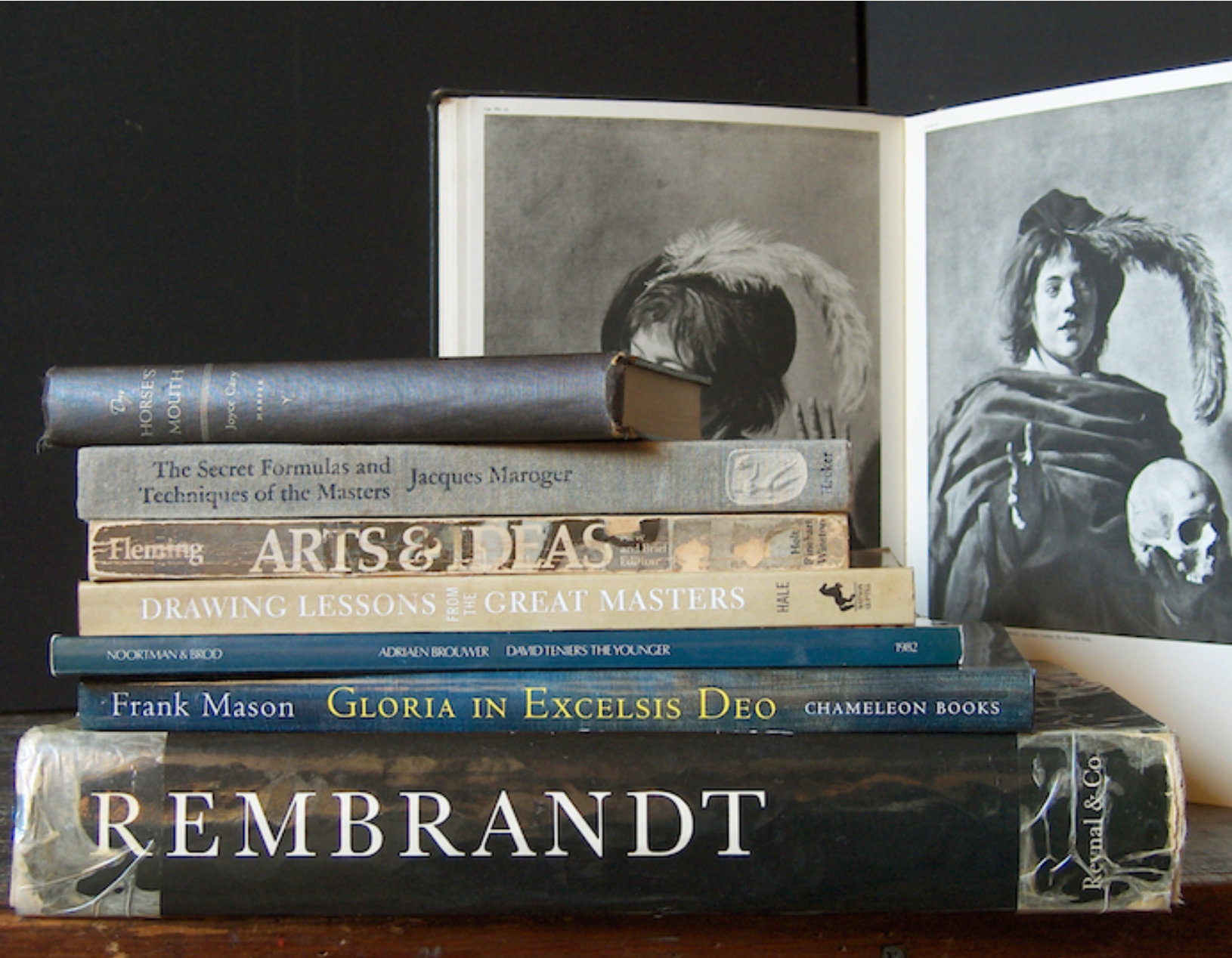
Art book you cannot live without?
There are various technical and material safety reference books for artists that I have referred to over the years, which are always being revised and updated.
What is the quality you most admire in an artist?
When an artist’s process shows in the work.
Do you keep a sketchbook?
I’ve done a lot of life drawing; I draw when I travel; I always drew models before sculpting and interpreting them, and I often draw my finished sculptures.
What’s your favorite museum in the world?
There are two: the Victoria and Albert Museum in London, and the Museum of International Folk Art in Santa Fe, New Mexico.
What’s the best exhibition you have ever attended?
Marisol: A Retrospective at the Montreal Museum of Fine Arts
If you were not an artist, what would you be?
When asked as a child what I wanted to be, my answer was always: an inventor — experimentation and discovery being shared processes with art.
Did you have an artistic cohort that influenced your early creative development?
Yes, Sidney Simon’s sculpture class at the League during the seventies and eighties. In those days, there was one instructor for clay, wood, and stone, and students moved freely from one medium to another; the materials and methods informed each other, resulting in a great variety of individual styles. This was an extremely enriching and inspiring environment to work in as a developing sculptor, both technically and aesthetically.
What is one thing you didn’t learn in art school that you wish you had?
To focus on experimentation and on process-oriented work.
What work of art have you looked at most and why?
I always find myself riveted in front of George Bellows’ painting, Blue Morning, because of his direct and expressive use of the medium in response to the subject.
What is your secret visual pleasure outside of art?
Architecture.

Do you listen to music in your studio?
No, it’s too influential and distracting for my sculpting process.
What is the last gallery you visited?
I recently saw The Ark at the Grand Hall exhibition space at Powerhouse Arts, Brooklyn.
Who is an underrated artist people should be looking at?
What art materials can you not live without?
Clay.
Do you create art every day?
I sculpt five days a week.
What is the longest time you went without creating art?
For the two years after childbirth—I was busy creating a person.
What do you do when you are feeling uninspired?
Between sculptures I clean my tools and organize my studio.
What are the questions that drive your work?
The momentum of my process drives the work.
What is the most important quality in an artist?
Persistence, experimentation, and discovery — and when that process shows in the final work.
What is something you haven’t yet achieved in art?
I always look forward to the experience of creating my future work and the surprises that it holds.
What is the best thing about art in the era of social media?
Discovering many other artists’ work.
MARILYN J FRIEDMAN (marilynjfriedman.com) teaches Interpreting the Figure in Clay, Abstracting the Figure in Clay workshops, and Exploring Materials for Teens at the Art Students League of New York.