Introduction
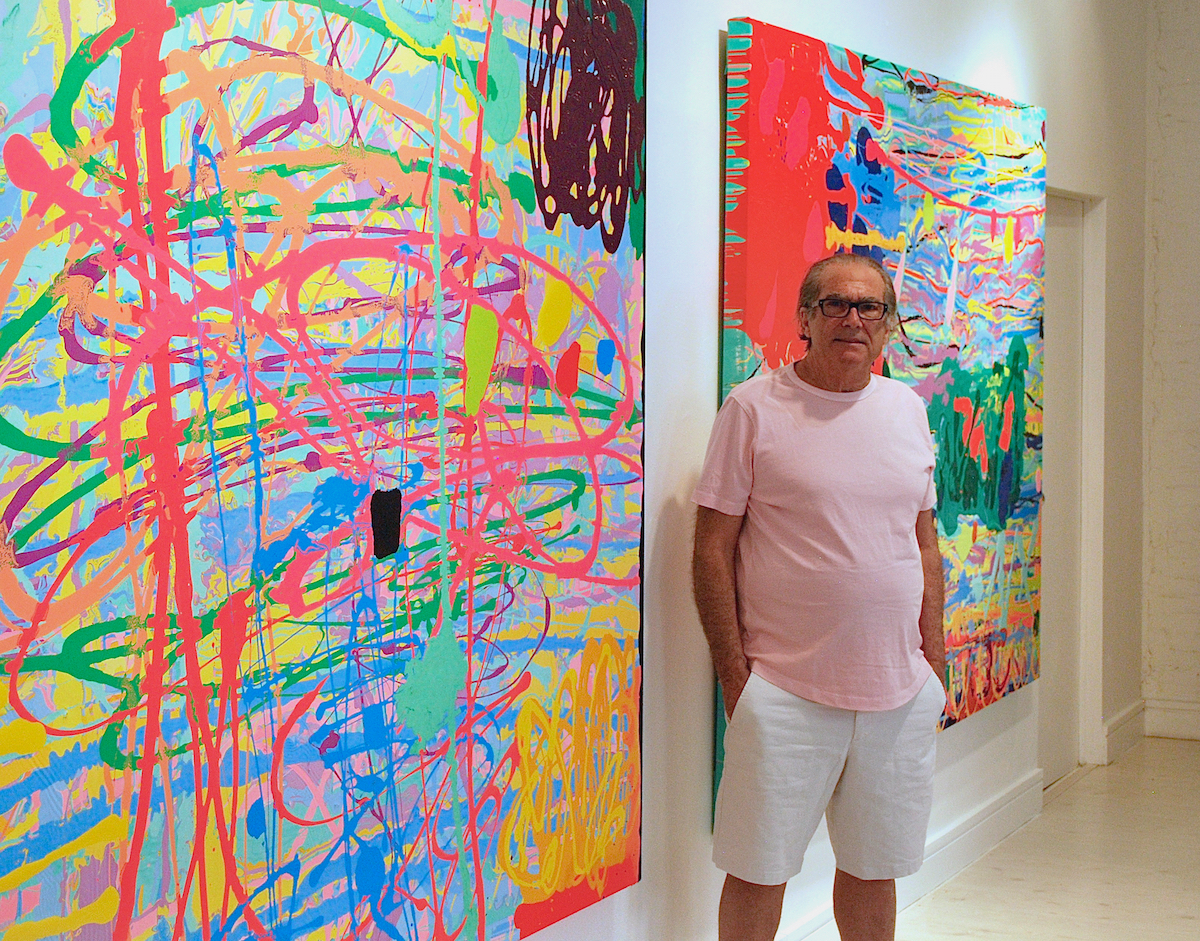
Born in the Bronx, Ronnie Landfield grew up in New York. This fourteen-year-old, who often visited 57th Street and the legendary galleries in Manhattan, was certain of one thing: he did not want to become a commercial artist, but rather an artist in the lineage of the first-generation pioneers: Jackson Pollock, Willem de Kooning, and Franz Kline. Painting, for him, was not a profession to be adapted to external demands, but a way of life expressed through material, touch, and decision. This conviction shaped both the form and the ethics of his work.
Lyrical Abstraction is a branch of Abstract Expressionism that emphasizes gesture, rhythm, emotional brushwork, and a poetic sensibility. Poetry functions here as an unspoken metaphor, visually achieved through two main channels: imagery and openness. Together, these qualities allow the work to breathe, sustaining the tension between what is shown and what is withheld.
Within this lineage, New York-based Landfield, alongside London’s John Hoyland, emerges as a leading figure, articulating the movement’s poetic and emotional possibilities within distinct cultural and spatial contexts. Landfield’s paintings are sites where expansive color, rhythmic structure, and emotional resonance converge, transforming landscape, memory, and sensation into a distinctly lyrical abstract language.
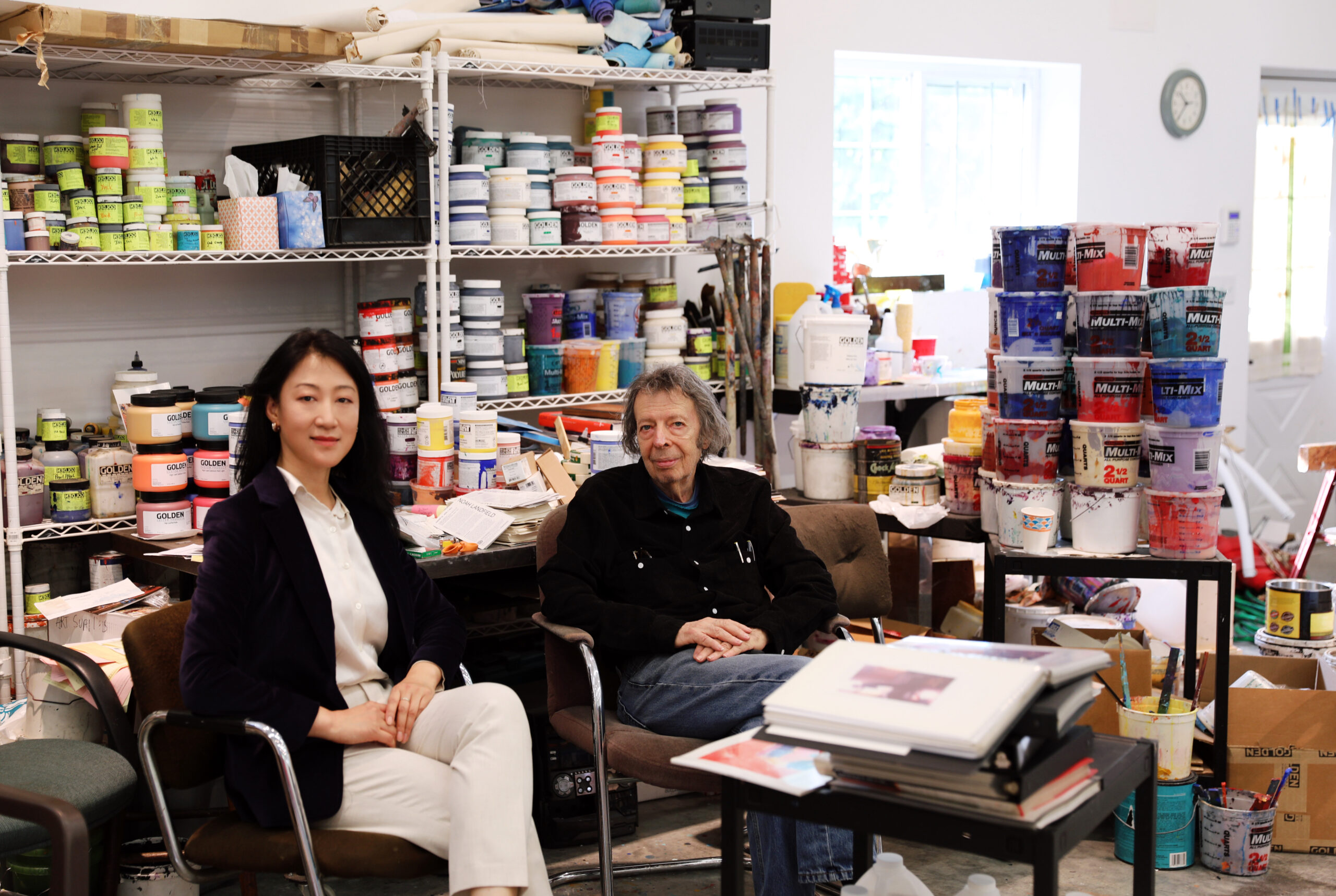
To situate Landfield’s practice within a broader art-historical field, I traveled to London to visit the studio of John Hoyland and to speak with his widow, Beverley Heath Hoyland, extending the conversation beyond a single voice to a wider Lyrical Abstract tradition, though no additional topics emerged.
Wei Wei (WW): Mr. Landfield, thank you for welcoming me into your studio. It’s an honor to visit and to learn about your different periods of work. I’m grateful for the opportunity to record this conversation.
Ronnie Landfield (RL): I’m very pleased to have you here and to show you my studio. Thank you for taking the time to talk about my work.
WW: Visually speaking, your paintings have a distinctive poetic rhythm and variation. The relationships between lyrical color and layered passages show both control and expressive force. How do you approach color, and how does it shape your work?
RL: In the world I live and work in, I’m trying to express how I feel about life, about the past, the future, and, most importantly, the present. Over time, I learned that color is a language: yellow, blue, red, orange, green, brown, black, tan. It’s an emotional and psychological language that can express things words often can’t.
Through shape, form, and color, you can express a life. You can use intensity and variations, light, pale, deeper and deeper, to tell stories. For me, abstract paintings relate to our lives and to the universe: how I feel, how you feel. That’s the hope.
It’s not only about my feelings. It’s also about how someone looking at the painting feels through color, form, space, surface, scale, and size. Color becomes a tool that can guide a viewer toward their own feelings. I want the audience to feel their own lives and recognize something in themselves.
Landscape, Structure, Emphasizing “Painterly,” and Finding Your Own Voice
WW: Many of your large-scale works carry the spirit of Abstract Expressionism while defining Lyrical Abstraction. They seem to have been distilled from the scenery, originating from nature but rising above it. Could you describe your philosophy and methods, especially in terms of scale, paint, and the translation of landscape into abstraction?
RL: When I first fell into painting, I realized I was painting my life. I also understood that I had to define what a painting meant for me, without accepting what experts insisted it should be.
Their message was essentially, “No, you shouldn’t do painting.” My response was: Don’t listen to them. Listen to yourself. The purpose is to find your own voice. This connects to what I was already sure of when I was fifteen, wandering around 57th Street: I didn’t want to be a commercial artist. I wanted to be a painter. Rather than thinking in terms of isolated images, my understanding of painting gradually took shape around foreground, middle ground, and background. This became one of the central structural ideas in my work, a way of keeping a painting alive rather than treating it as a flat object. For me, the background can open into infinity, while the middle ground sustains complexity without becoming literal.
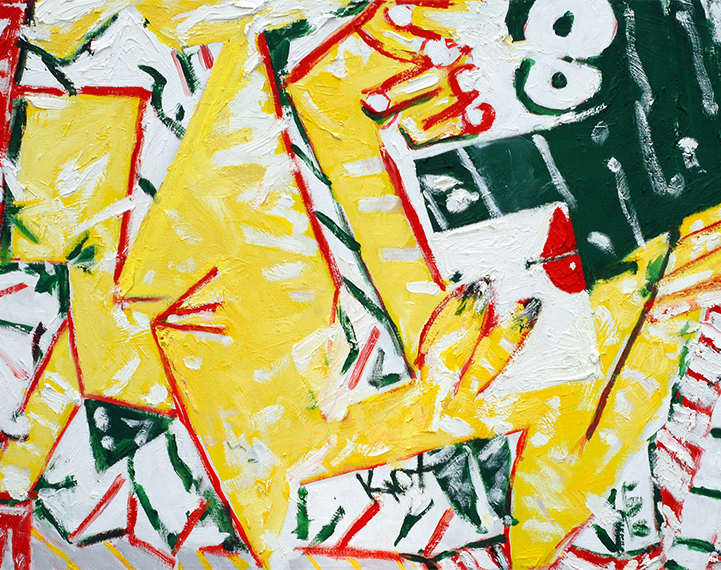
At the same time, there was a clear resistance to locking myself into Minimalism or hard-edge logic as ends in themselves. What mattered was remaining painterly. “Painterly” is one of my central words because it means that a painting has lived through paint, through touch, through the physical intelligence of the material.
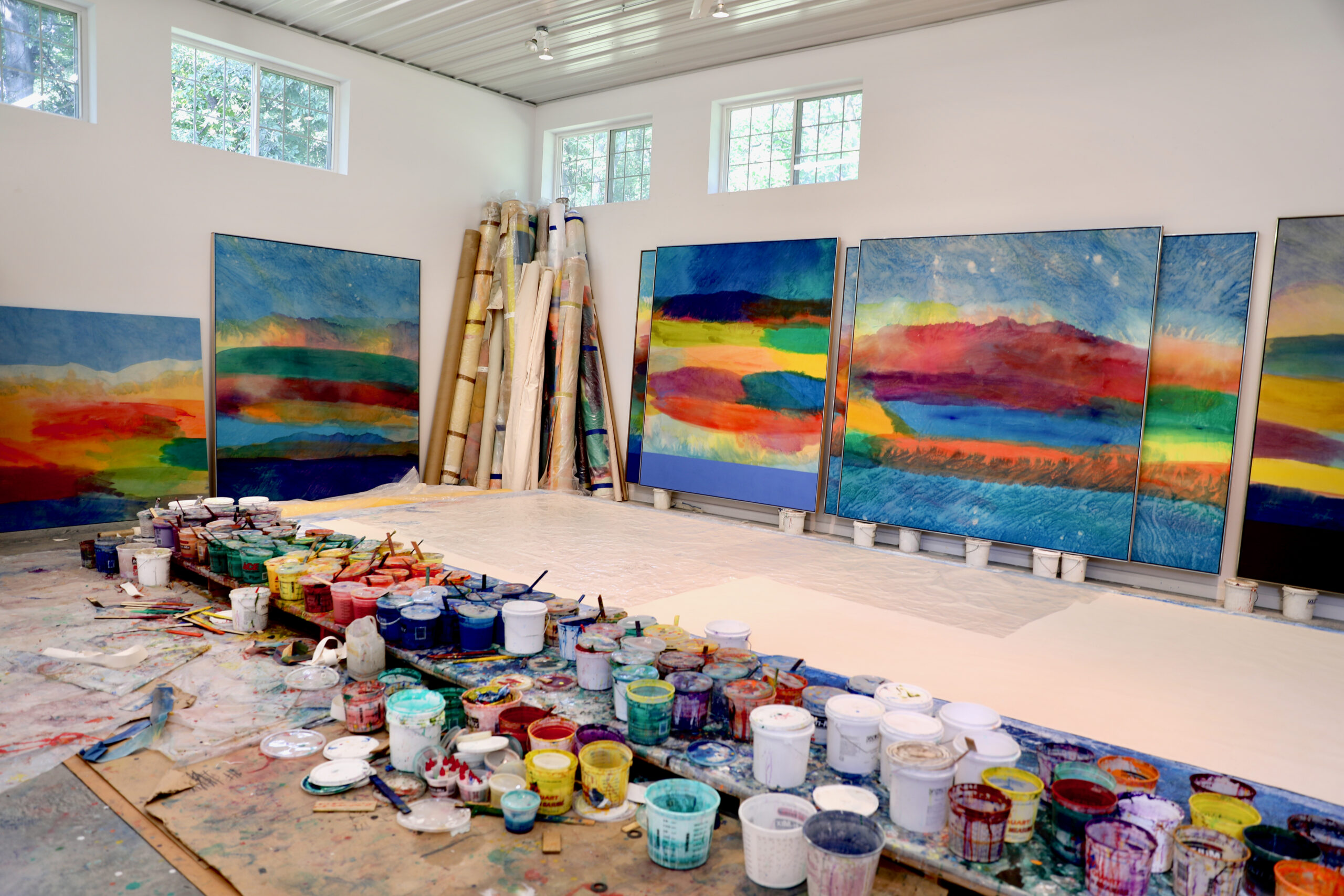
That commitment led me toward staining and pouring, allowing paint to form itself, to run and happen. Through this process, I came to understand how flow behaves by lifting and angling the canvas, guiding the movement of paint without forcing it.
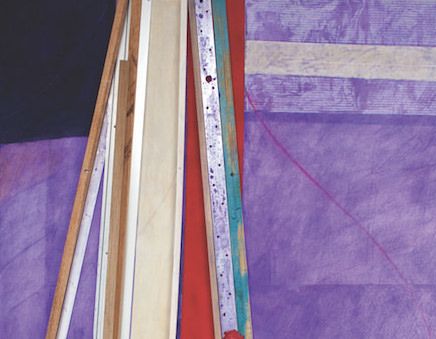
Around the age of twenty-one, I moved toward larger stains, stretching the canvases to eight, nine, or even ten feet. At that point, I realized the paintings needed a stronger foreground presence, which led me to introduce a hard-edged band. With that, I could feel both the finite (foreground, middle ground, background) and infinity within a single work.
WW: So the contrast between the finite and the infinite becomes a way to express life, one that feels right to you while keeping the work painterly at its core?
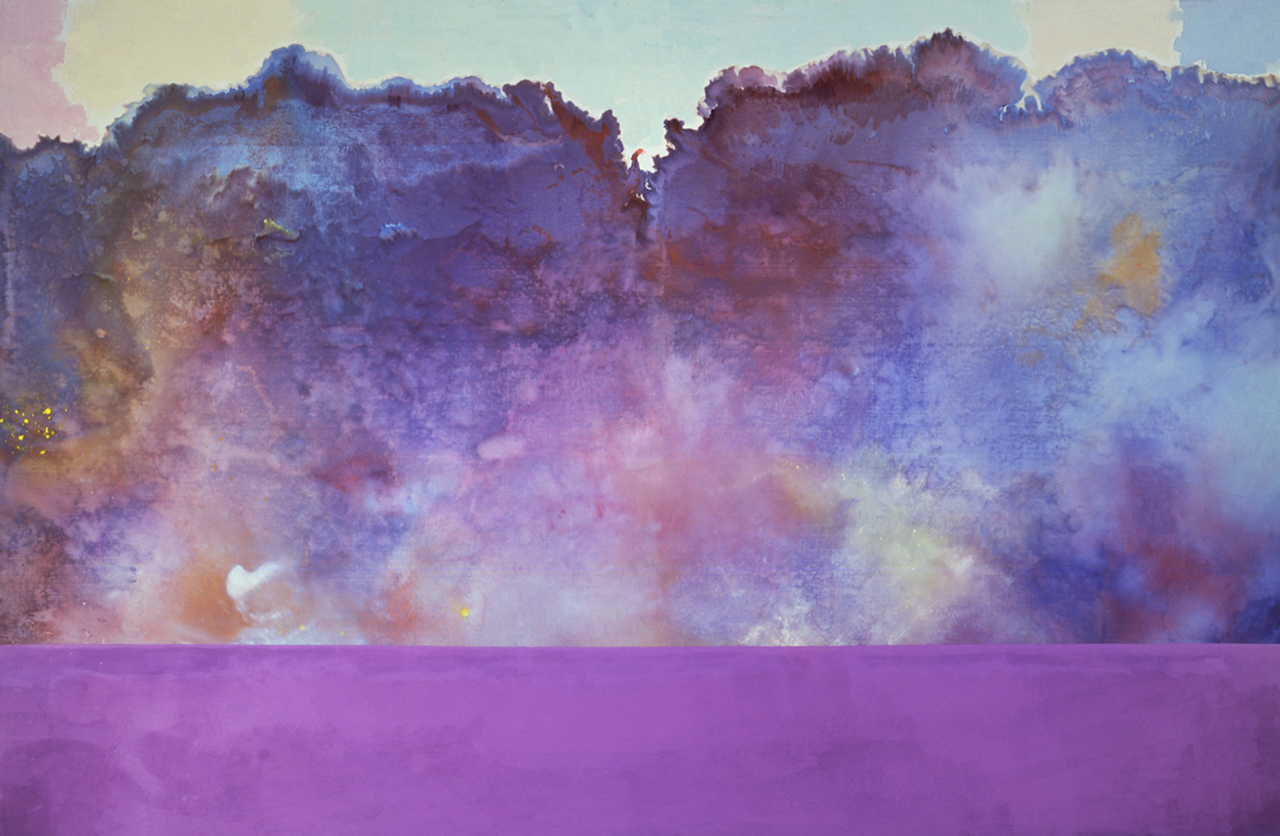
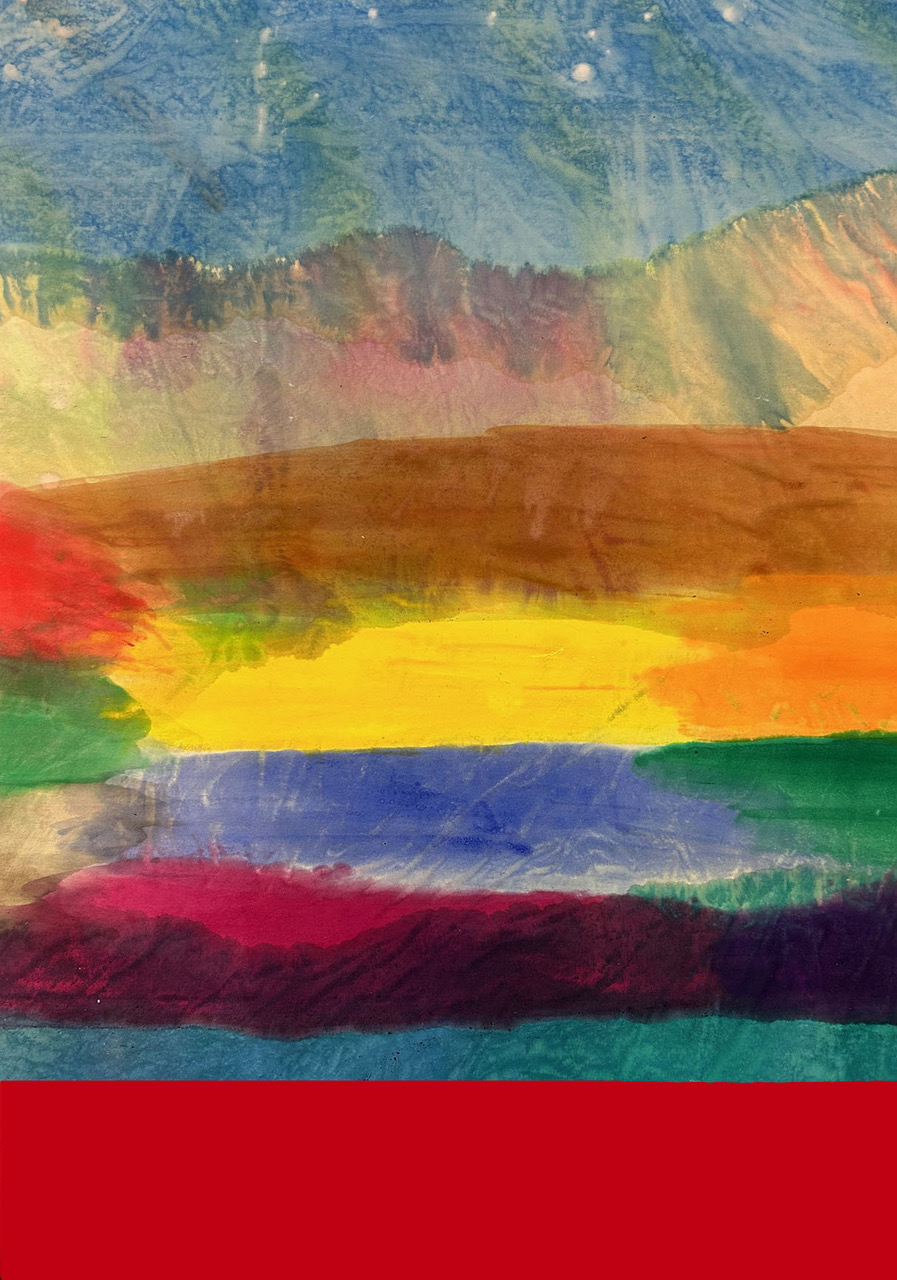
RL: Exactly. I remember that around October 1969, as I was preparing for my first one-man show, an art critic visited my studio and remarked that my paintings, including Diamond Lake, looked like a Chinese landscape. I took that as a meaningful recognition: I could relate to older traditions across distance and time. I also knew I needed something distinct in my own vocabulary, and that was where bands and geometry entered, not as Minimalism, but as a framework within a painterly language.
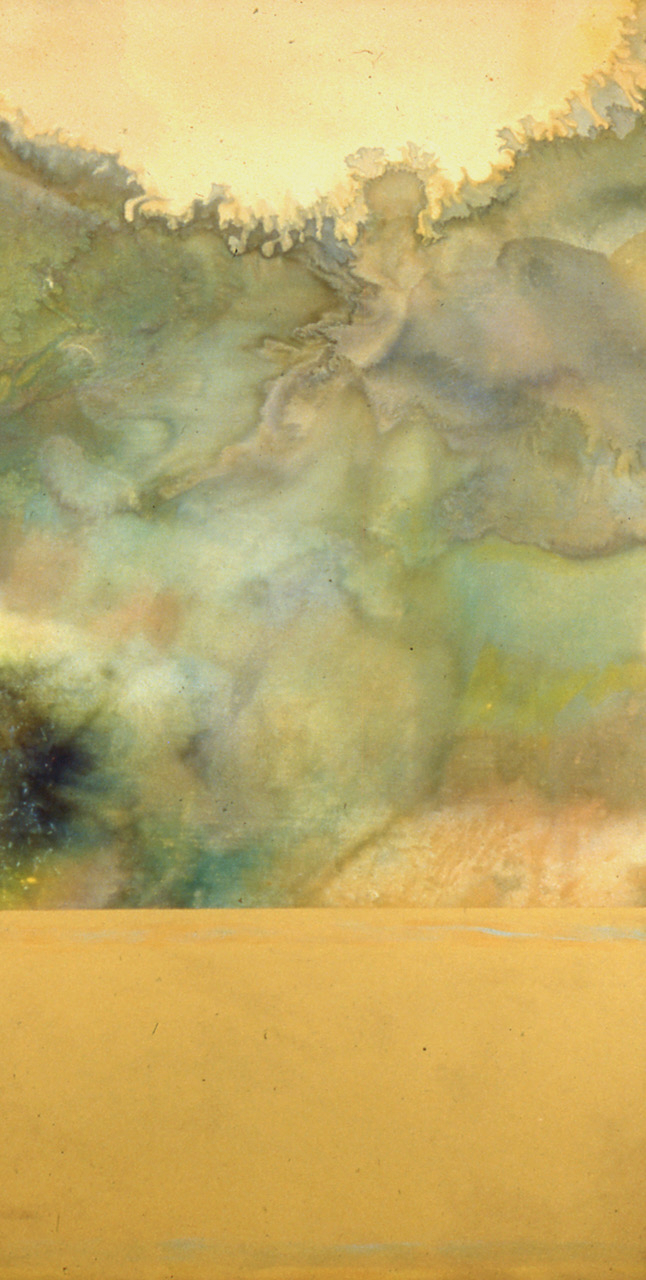
In other works, such as Elijah, also in my first show and later shown in Beijing, I introduced calligraphic elements within the band. The more intense color, especially within the band, helped emotionally define the painting. I was also influenced by Kenneth Noland, who told me that color is a psychological language, which confirmed what I already felt.
Landscape mattered to me precisely because I kept hearing it was old-fashioned and dead. That resistance made it more compelling. I pursued it in my own way, without illustration and without trying to become Monet.
WW: Your work often holds together hard-edge geometry, expressive brushwork, and multiple textures. When you combine these different elements, how do you keep them coherent?
RL: When they’re harmonious, they’re harmonious. When they’re different, that can be okay too. The hope is that the elements keep working against and with each other, creating a tension that holds the painting together. Otherwise, it fails.
WW: When did the stain paintings and certain technical procedures become central?
RL: I began making stain paintings around 1968, working on the floor. Some large works used extensive tape and hand-painted lines, every line done by hand with tape and brush. The paintings could evoke mountains, forests, or other landscapes without becoming a literal description.
Elijah was part of my first one-person show at David Whitney Gallery, not the museum. Diamond Lake entered MoMA’s collection. I understand Elijah was shown in Beijing and later held by the U.S. State Department; at one point, I heard it was in Cuba. I hope it has remained safe.
Lyrical Abstraction as a Historical Position
WW: When did “lyrical abstraction” become a meaningful term for you?
RL: From the mid-1960s, many critics claimed painting, and especially Abstract Expressionism, was over. Pop Art, Op Art, and Conceptualism were treated as the future. But for many of us, Abstract Expressionism was spirit and soul, a human expression. It was about feeling, like jazz, rock, folk, something internal.
We had given up on Minimalism and the exactitude of “It’s only this.” We embraced the sense that it might be this too, and that it could be many things together. We began to be called lyrical abstractionists in the early 1970s. The term had previously described certain European Abstract Expressionist tendencies, and it resurfaced. For years, people mocked it until it became clear that lyrical abstraction was real.
In my view, many major painters made lyrical work in one form or another, from Arshile Gorky to Helen Frankenthaler, and then artists of my generation: Dan Christensen, Larry Poons, Brice Marden, Peter Reginato, and others. I wrote and assembled work around this history because it mattered to me.
Influences: Poetry, Odetta, and McLuhan
WW: You’ve spoken about poetry and music as parallel languages to painting. Could you describe what you found there?
RL: Poetry, especially certain kinds, felt close to abstraction: one word, then another, building leaps and leaving space for imagination. When I was about twenty-one, around 1968, I worked for Something Else Press, owned by Dick Higgins and Allison Knowles, and met poets connected to concrete poetry. That experience helped me clarify where I wanted to go in painting.
The press’s owner disliked color and preferred black and white, because the word on the page was black and white. I found that contrast revealing.In those days, I listened to Bob Dylan constantly. Another foundational influence was Odetta. Hearing her when I was young changed my life. She gave me something I needed as I was starting out.
These experiences also relate to McLuhan’s concepts about how a medium shapes perception. In painting, the medium is not neutral. Paint has its own intelligence, and that returns to my central concern with being painterly.
Mid-1960s New York: Loss and Breakthrough
WW: When you first came of age in New York, what shaped you most, and which early circles mattered?
RL: Friends were crucial at the beginning. Very few of us had money, and very few knew where we were going, except that we were following our instincts.
As a New York City kid, I spent a lot of time looking. I visited galleries while still young: the Green Gallery, Leo Castelli Gallery, and Andre Emmerich Gallery. I saw Andy Warhol, Frank Stella, Ron Davis, and I saw Larry Poons at the Green Gallery. I learned by watching and by being in the city.
When I went to California, I met artists who were essentially classmates at the time. I met Peter Reginato at the San Francisco Art Institute, and others. I stayed about a year and then returned to New York at eighteen, thinking I could handle the New York art world.
Back in New York, the community was built through shared studios, shared rent, and constant looking at one another’s work. Those practical realities, and the need for conversation, were part of the culture.
WW: You’ve mentioned a fire early on. What happened, and what did it change?
RL: In February 1966, when I was nineteen, I went to a Warhol film screening where the Velvet Underground played live. Afterward, I went downtown to paint, and my building had burned down. The studio was gone.
Friends helped salvage what they could. Peter Young helped rescue sculptures by my friend Michael, with whom I was sharing the loft on Broadway between Spring and Broome streets; Dan Christensen helped me pull out what I could and store it at his loft. I was angry, and I drew obsessively.
Out of the blue, I contacted Philip Johnson, the architect and art collector connected to the Museum of Modern Art. He met with me and said, essentially: You should be in school. I told him I didn’t want school; I wanted to make art. He said: Make work, then come back and show it; get a job and rebuild your studio situation.
I talked my way into a commercial art job on 57th Street (advertising), which gave me income and materials. Soon after, I moved into a shared studio situation again, on Great Jones Street with Dan Christensen.
I began making the large border paintings, each measuring 6 by 9 feet. I called Philip Johnson; he saw the work and bought one painting for $700. My rent was about $100 a month. That painting later entered a museum collection in the Midwest, the Sheldon Museum of Art in Lincoln, Nebraska. After that, I quit my commercial job and continued making the work.
WW: Looking back at the late 1960s, how did you communicate with peers and friends, especially those whom you encountered beyond New York, like Peter Reginato and others? I have interviewed Mr. Reginato and published an essay about him, and I understand you have been friends for about six decades.
RL: Peter Reginato was a close friend in San Francisco. I kept telling him, why are you there? Come, come to New York! This is where it’s happening. Eventually, he came, driving across the country, accompanied by Michael Heizer. We threw a big party, and within days, they found the loft on Greene Street. This was fall 1966, and Peter still lives there. Michael Heizer later became a legendary figure associated with large-scale work and site-specific sculptures in the American Southwest.
Ivan Karp, Dorothy Herzka, the 1967 Group Show, and the Whitney Annual
WW: How did the first major breakthrough happen?
RL: One day, I went to a Warhol show at Leo Castelli Gallery carrying a book of drawings. Ivan Karp, who ran the gallery, called me over, looked at the drawings, and gave me a number to call, saying they were looking for young artists. Donald Judd was standing there at the time.
I called and was invited to the Bianchini Gallery on 57th Street, where I met Dorothy Herzka, a talented woman who later married Roy Lichtenstein. She saw my drawings and then came to my studio to see the larger border paintings. She proposed that I curate a group show of myself and friends at her gallery.
We organized the show for March 1967, including Peter Young, Dan Christensen, Ken Showell, Peter Gourfain, and me. Around that time, I was between spaces and stayed briefly at 60 Greene Street. I then began to rent a loft at 94 Bowery. After that show, we were all invited into the Whitney Annual (1967). I showed Howl of Terror. I was about twenty years old and began to paint new and larger paintings.
Los Angeles Peer Networks and the First One-Man Show
WW: At what moment did you begin to sense that your work was being recognized not only within your immediate circle, but across a broader artistic network? How did that shape the early visibility of your large-scale stain paintings and contribute to your first sustained engagement with the gallery system?
RL: In late 1968, after I had begun making my large-scale stain paintings, my neighbor and friend Peter Young returned to New York after his solo show at the Nick Wilder Gallery in Los Angeles. At the time, we were both living at 94 Bowery. I was on the top floor, and Peter Young was on the ground floor. Peter told me that while in Los Angeles, he had met artists making work with a style similar to mine.
In early 1969, I flew to Los Angeles and met Bill Pettet, who was making some really cool large-scale stained abstract paintings. He was friends with Ron Davis, whom I had first met in 1964 and whose abstract work I deeply admired. During that visit, I encouraged Bill to move to New York. Not long afterward, both Bill and I were included in an important print portfolio called NY 10.
Actually, several months earlier, around August 1968, Peter Young brought David Whitney to my loft to see my new paintings. Peter had told me that Whitney often advised Philip Johnson on what to collect. When David came into the studio, to my shock and delight, he purchased two paintings, each measuring 9 × 10 feet, Cheat River and St. Augustine. It completely blew my mind and was a tremendous help at that moment.
After visiting Bill Pettet and Ron Davis in Los Angeles, we went out to dinner together. To my surprise, David Whitney appeared as well. We all had dinner—Bill and his wife, Ron, Nick Wilder, David Whitney, and me. I soon learned that David had purchased twelve or thirteen of Bill’s new paintings, a decision that strongly encouraged Bill to move to New York.
A few months later, back in New York, Bill and I were finishing our prints for the NY 10 portfolio when David Whitney came by and announced that he had decided to open a gallery. He invited me to have my first one-man show, which was also the first solo exhibition at the David Whitney Gallery.
WW: When you were a booming artist, which dealers and galleries mattered most, and what did that scene feel like?
RL: In that era, certain dealers felt legendary: Dick Bellamy (also known as Richard Bellamy) at the Green Gallery, Leo Castelli Gallery, and André Emmerich Gallery. At Emmerich, I saw color field painters; at Castelli, Pop and hard-edge; at the Green Gallery, artists like Larry Poons and early Pop developments.
As a teenager, I saw how the art world could explode. In 1962, the Sidney Janis Gallery staged New Realism and introduced a wave of Pop and related work by Warhol, Roy Lichtenstein, Marisol, George Segal, and Claes Oldenburg. Many artists associated with Abstract Expressionism and their estates reacted strongly. The art world became polarized, and major allegiances shifted.
I also remember the Samuel Kootz Gallery as important, associated with Hans Hofmann. Hofmann mattered because he was central to how that generation understood painting, and I remember the gravity of that presence in the gallery world.
Barter, Survival, and “Knocking on Doors”
WW: Before galleries fully supported your work, how did you manage to continue your practice as an artist?
RL: But I still needed galleries to take my work seriously. I wasn’t Picasso. They weren’t knocking on my door; I had to knock on theirs. I felt shy about dealing with dealers, even when I was confident about my work.
Larry Poons and Painterly Risk
WW: Your friendship with my mentor Larry Poons seems pivotal. How did it begin, and what did you learn from each other?
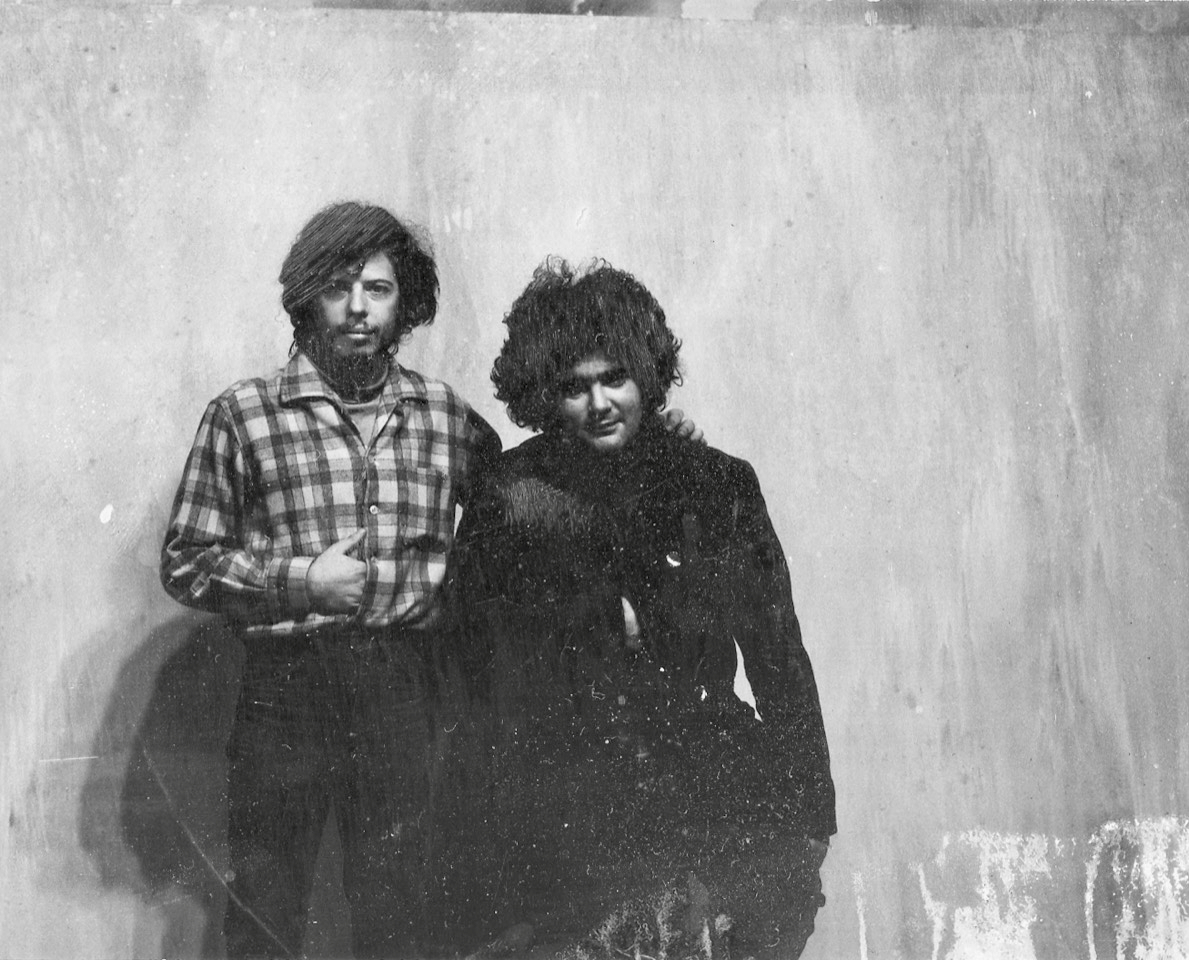
RL: My painting in the Whitney Annual in 1967 was hung opposite Larry Poons’ work. Soon after, we met in a bar; he introduced himself and invited me to his studio. We became friends.
I liked his painting because it was painterly. This matters because “painterly,” the insistence on painting-ness and the living intelligence of paint, is one of my central words. His earlier paintings had been very geometric, and here I was seeing something looser.
In his studio, I told him, sort of provocatively, that he was making the same painting repeatedly: changing the ground color, then placing ellipses or related marks on top. Larry went to the corner, picked up a five-gallon container of green paint, and smashed it onto a large purple painting, letting it pour and run. He said, “You’re right, kid.” After that, he moved away from that geometric approach and began a more thrown, gestural method.
Critics could be contradictory. Some said my work was too beautiful, therefore bad. They said Larry’s was not beautiful enough, therefore bad. But we both did what we needed to do.
We also talked about music. Larry has been deeply connected to music; we talked about composers and intensity in art. My own sense is that the shift from “beauty” to power, gesture, and how the risk can be essential for our works.
Teaching: Bennington, SVA, and the Art Students League
WW: Teaching became another dimension of your practice. We have an old saying in China: Teaching and learning complement each other. So how did it begin, and what has it given you?
RL: My initiation into teaching came through Larry Poons. Around 1968, he had a teaching job at Bennington College in Vermont and didn’t want to go, so he suggested I do it. I was very young. I taught without grading; the school paid Larry. I learned I could go into a studio, look at work, talk seriously, and help students move forward.
Later, in 1975, I joined the faculty at the School of Visual Arts (SVA), teaching fourth-year fine arts. I taught there from 1975 to 1990. Around 1990, enrollment declined, and painting was widely declared dead; many faculty were cut, and I stopped teaching. In the early 1990s, the economy was difficult, and I needed stability for my children, including health insurance. An assistant of mine, Nicole, later left for medical school, but before leaving, she wrote letters to art schools offering my services.
In 1994, the Art Students League of New York called me for a meeting and offered me a teaching position. I began teaching an all-day Saturday class, later adding Sunday.
WW: As I know, when you were teaching, your class had models. What makes you feel that when you paint abstract, you still need models to draw figurative works?
RL: Having a model was essential for me. One of the most important artists I learned from when I was young was Richard Diebenkorn. I met him in 1965, just before I left California. I once asked him why he painted figurative work when he could be abstract. He smiled and said, “You’re right, kid.” About a year later, much of his work became abstract. I learned a great deal from his use of the figure.
Even when I was making abstract paintings, I continued drawing the figure. Figure drawing was the only class I ever really went to, because it’s good for the hand and the eye. You don’t have to invent anything; you just draw what’s there. That discipline helped my abstract painting. You can see it in my early work, including the portraits I used to make.
So when I taught at the League, I insisted on having a model. It helped abstract painters and figurative painters alike. If someone didn’t know what to paint, they could draw the figure. And when they were ready to move on, I could help guide them. So having a model mattered because figure drawing strengthens the hand and the eye. I learned from the figure’s discipline, and I wanted my students to have those skills as well. Eventually, they asked me to teach Monday through Friday as well. That’s how it all unfolded.
WW: Mr. Landfield, thank you so much for your time today and for sharing these experiences and reflections so generously. It’s been a real privilege to talk with you in the studio and to learn more directly from your work and your history.
RL: Thank you. I really enjoyed the conversation. You prepared a lot for this interview and asked thoughtful questions, and it’s always meaningful for me to revisit these moments and think through the work again.
Conclusion
Ronnie Landfield’s work affirms painting as a lived, painterly practice shaped through color, scale, and material decisions. Through staining, pouring, and structural bands, his paintings sustain a dynamic tension between control and openness, Spatial articulation and infinity, translating landscape into sensation rather than depiction. Equally central is the social context in which this work emerged. Landfield’s trajectory reveals the importance of peer networks, shared studios, supportive collectors, and institutions within the New York art scene of the mid-1960s and beyond. It’s an ecology in which dialogue, risk, and mutual recognition enabled artistic growth. Situated within the New York lineage of Lyrical Abstraction, Landfield’s paintings translate landscape into sensation rather than depiction, allowing memory, movement, and breath to emerge with a poetic sense.
With thanks to Ronnie and Jenny Landfield for their generosity in conversation and in providing access to studio materials.
RONNIE LANDFIELD (ronnielandfield.com | @rlandfield) is an American abstract artist and a leading figure of Lyrical Abstraction. He teaches an online class, Drawing, Painting, Color, Design, at the Art Students League. WEI WEI (@weiwei_kassandra | @weiwei_arthistory_writer) is an abstract artist and art historian based in New York. She holds an MA in Fine Art, RCA, a PhD in Art History and has completed postdoctoral research in fine art and philosophy.