

In July of 1949, Bernice and Raymond Sacks, along with Savo Radulović, got in a large black Buick and drove from New York City to Mexico City to meet the artists of the Taller de Gráfica Popular (The People’s Graphic Workshop, or TGP). The open road and the gloriously complex mixture of past, present, and future artistic and political movements in Mexico were calling them. Embedded in the grand sweep of Mexican art history—Mayan and Aztec cultures, folkways, Spanish and French colonial dominance, Catholicism, and more—and the violent worldwide upheavals of the first half of the twentieth century is the story of a remarkable small gallery in New York City, the story of my family, and the achievements of the TGP.
Savo Radulović (1911–1991) was early in his career and known for his woodcuts. In 1946, he studied with teachers at the Art Students League (ASL). Bernice Sacks (1924–2013), my mother, also a student at the ASL, had recently assumed ownership of the Tribune Subway Gallery. It was a moment of high drama. Her friend, Georg Friedrich Alexan, a communist and the gallery’s founder, had fled the country in May of 1949 to escape being arrested by the FBI for treason. Before escaping, he had sold the gallery to Bernice and left its legacy in her hands. She was twenty-five years old.

The Tribune, as it was often referred to in newspaper art columns of the time, was located at 100 West 42nd Street, beneath the Schulte Cigar Store, in the Sixth Avenue Subway arcade. The gallery opened on May 8, 1945, the day after VE-day, marking the end of World War II. It was hidden in the back of a bookstore in this subterranean space, visited by those looking for it and by the public. The subway cost ten cents. It was not only a triumph of engineering for the great metropolis, but the subway arcade was also a place where people could shop, eat, get a haircut, buy jewelry and flowers—and now see great art. Bernice’s first show of printmakers included work by her friend, Savo, who in 1949 was described by Charles Corwin, art critic for the Daily Worker, a Communist Party publication, as “a Yugoslav who worked in the coal mines and steel mills before turning to painting, works with considerable violence.” (Daily Worker, May 27, 1949)
The third traveler, the driver of the Buick, was my father, Raymond Sacks (1919–1965). I remember the car because years later, he would drive me around in it when I was a child on the backroads of Amagansett, Long Island. He would pretend we were lost along those heavily wooded roads with trees bending their branches over the curving path, but of course, we never were lost. It was a game I loved—to be lost with him. I would try to imagine the three friends driving through America all the way to Mexico City, and I would wonder if they had driven the art back for the show that would open barely two months later. How did they do that? How did they know what artists to meet? Where to go? Questions that will remain unanswered.
 That big black car. I nearly lost the tip of my finger as a two-year-old when its heavy door closed on it. The scar remains. My father died when I was ten, and so memory holds onto all that it can, the odd detail, as it lets go of so much more. In 1949, Raymond was a lawyer, just starting out, working for Susan Brandeis, the daughter of Louis Brandeis, the first Jewish Associate Justice of the US Supreme Court. Circles of relationships and ambitions spinning together.
Bernice kept a box of documents languishing in a dank basement for over sixty years. I found them after she died in 2013. Some faded. Some ripped. Lying there were Tribune brochures, with many essays written by Bernice. It would take me time to realize my father had used a pseudonym. Essays by Alexan. Essays by other writers known to me from The Masses and Mainstream and the Partisan Review. These materials, along with meticulously kept photo albums (Ray was both the driver and photographer), newspaper reviews, ads, and art on the walls and the books on the shelves, would reveal the story of the Tribune’s 1949 exhibition of the artists from the Taller de Gráfica Popular. I have no words from my father that I remember hearing. I do have oft-repeated phrases from my mother. “We drove to Mexico with Savo,” was one. Ads in multiple papers, including the New York Times, Art News, The World Telegraph, and New York Herald Tribune, announced the exhibition. I never met Savo, but his painting for decades hung on the wall in the home I grew up in.

A child takes things for granted. Of course, there is art on the wall and books on the shelves. A teenager is preoccupied with the challenges of growing up. Life in the moment. Questions about the past go unasked, unanswered. Stories recede, yet somehow, their magic, meaning, and resilience stay in the air, embodied in how people live their lives and pass on their values. There was never a dinner in our home on the Upper West Side of Manhattan that did not have the Mexican blue angel candle sticks on the table, radiant as they were with lead-based paint. In this sense, that 1949 Tribune Gallery exhibition showcasing sixteen graphic artists of the TGP was always around me.
In describing the exhibition in the brochure, Bernice wrote:

No one can mistake the soft-toned lithograph of Alfredo Zalce for the swift, rugged woodcut of Leopoldo Méndez. The show contains the collective work of 16 artists, each able to stand alone in a one-person show. Included are 85 engravings of the Mexican Revolution, 20 woodcuts by Méndez, 10-colored lithographs from “Mexican Mother” (Mexihikanantli) by Jean Charlot; an extensive collection of individual studies by members and visiting members of the Taller—Zalce, Ramírez, Anguiano, Aguire, O’Higgins, Siqueiros, Bustos, and others. The styles are as diverse as that demanded by satire or romance or as each objective event was colored by individual interpretation and technique.
The distance between the two great cities, New York and Mexico City, was about 2600 miles, but it was not, for these travelers, as great as it might seem. They were connected by the ideas that motivated their work. The artists of the TGP wanted to reach millions of Mexicans, eighty percent of whom were illiterate at the time. Bold graphic images—printed as posters, cartoons, leaflets, frescoes, in lithographs, engravings, and drawings—told the stories of Mexican peasants and workers in their fight for social justice. The Tribune did not seek patrons; its stated purpose was to serve artists and humanity in the pursuit of peace and justice. The TGP artist Alberto Beltran (1923–2002) said that “artists should work for the people, not for money.”

By 1949, the gallery had already shown Vincent van Gogh’s prints of the coal miners of the Borinage. Käthe Kollwitz’s work was one of the Tribune’s first shows. The first drawing my mother gave me when I moved into my own apartment was a Kollwitz self-portrait signed by the artist. Years later, she gave me a Kollwitz lithograph of mother and child, which I still see every day. Every day it reminds me that mother and child are intimately embraced and forever smashed together.
The red line that connected these travelers and artists to one another and my mother to me was not on a map but was in a belief system. Some of the artists were communists, some were fellow travelers, and some passed in and out of the Party over time, but all were part of the left progressive movement of the day, some as members who had signed statements of principles, and others who were guest participants in the mission and vision. The movement was powered by the struggle and success of the 1910–20 Mexican Revolution and the fight against fascism in Europe. It was enriched by an émigré culture fleeing Europe that brought many people, artists, and intellectuals, many of whom were Jewish, to these great cities. Mexico was the first country to support the Republicans in the 1936–1939 Spanish Civil War. Mexico sent arms and resources and welcomed refugees from Spain and then from across Europe. The result was that Europeans landed in both Mexico City and in the late 1930s and onward.

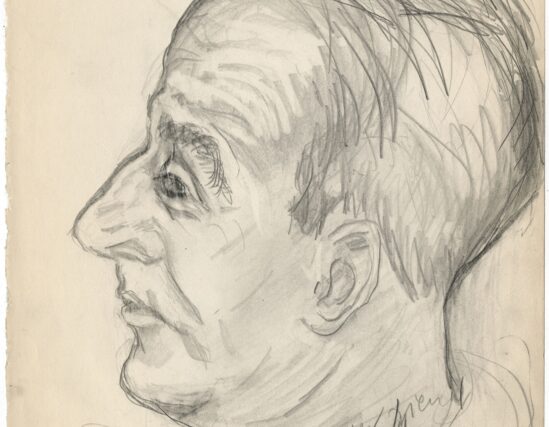
In 1942, Hannes Meyer (1889–1954), the architect and second director of the Bauhaus, fled from Germany to Mexico. He became the business director for the TGP and established a printing house, La Estampa Mexicana. Edited several books. The first, El Libro Negro Del Terror Nazi En Europe (The Black Book of Nazi Terror in Europe), was published in Spanish in 1943. It included testimonies from witnesses in sixteen countries throughout Europe, with 164 photographs and 50 drawings depicting atrocities of the war in art, possibly for the first time. The book was endorsed by the President of Mexico (1940–1946), Don Manuel Avila Camacho, again highlighting why Mexico’s leading city was a destination for refugees during this time.
In 1949, with Meyer as editor, the TGP released TGP Mexico—Twelve Years of Collective Art at the Tribune Gallery. With a twenty-four-page introduction in Spanish and English, the book included the work of fifty Mexican artists, some of whom are seen here in works from the book, along with five signed engravings in each book. Meyer wrote detailed biographical histories for each of the artists featured in the book, some of whom were not born in Mexico but all of whom were living and working in Mexico and a part of the TGP. Many are well-known today, some not. All sixteen artists showcased at the Tribune exhibition were profiled by Meyer in the book.

In the book, as well as at the Tribune, was the work of Jean Charlot (1898–1979). Charlot was born in Paris. Charlot’s maternal grandfather, also French, had married a woman who was half-Aztec and his mother, with whom he was close throughout life, had a great affinity for Mexican culture. Charlot grew up familiar with Aztec art. As a teenager, Charlot learned the language of the Nahuatl, the indigenous people of Mexico. He lived in Mexico in the 1920s; in 1930, he taught at the Art Students League; and in 1940, Charlot became an American citizen. Over many years, he collected prints from his fellow artists, which included a sizeable portfolio of work by José Guadalupe Posada (1852–1913). Posada, an artist from an earlier generation, greatly influenced the work of many of the TGP artists to follow him. Years later, Charlot would donate his collection to the Metropolitan Museum of Art. The Met currently has on view Mexican Prints at the Vanguard, which includes many prints from the Charlot gift, and where it is now possible to see a great body of TGP work.

Diego Rivera (1860–1957), also included in the book, was a celebrated artist and an outsized personality at this point in his career. He had studied in Europe, been to Moscow, and was friends with Alfred Barr, Jr., the director of the Museum of Modern Art. He was a member of the Communist Party. He and artist Frida Kahlo, with whom much has been explored about their passionate life together, were friends at the time with Leon Trotsky (1879–1940). Apart from Rivera’s presence in the TGP book, Rivera’s work is conspicuously absent from the Tribune exhibition. He had been in many fights with colleagues in Mexico, as well as an infamous one with John D. Rockefeller, Jr. He had accepted a commission to create a mural for Rockefeller Center, which many colleagues on the left viewed as a betrayal. He compounded his problems by adding a laudatory image of Lenin and a mocking one of a capitalist, which in turn outraged Rockefeller, who then had the mural destroyed. Kahlo’s work and profile were also represented in the TGP book, though her work was not included in the Tribune exhibition.
Many TGP artists were self-taught, having grown up without schooling or travel. But they did see reproductions. Reproductions from Europe at this time were very good. It was a point of pride at the Tribune Subway Gallery that the reproductions they sold came from Europe and that the viewer could trust that the colors were correct. TGP prints were made with care regarding execution and paper choice. Thus, many Mexican artists who were self-taught and unable to travel to Europe to see original works were nonetheless familiar with Goya, Daumier, Doré, Hogarth, Rembrandt, and Kollwitz—artists committed to realism and to the print in its various forms.

Other artists who were both in the book and the Tribune exhibition included Leopoldo Méndez (1902–1969). He was a prolific graphic artist and founding member of the TGP. He grew up poor, his parents having died by the time he was two. He joined the Communist Party in Mexico in the early 1930s. In 1939 he received a Guggenheim Fellowship. As an artist and activist, he was awarded the 1952 International Peace Prize from the World Council of Peace in Vienna. Ignacio Aguirre, a painter and engraver, fought in the Mexican Revolution with Carrannza’s forces against Pancho Villa; he worked in a mine and was a founding member of Liga de Escritores y Artistas Revolucionarios (LEAR), which in some ways was a precursor to the TGP. Alberto Beltran was another artist who was featured in both the book and the Tribune exhibition. He, also self-taught, was an illustrator who became well-known for his political cartoons.
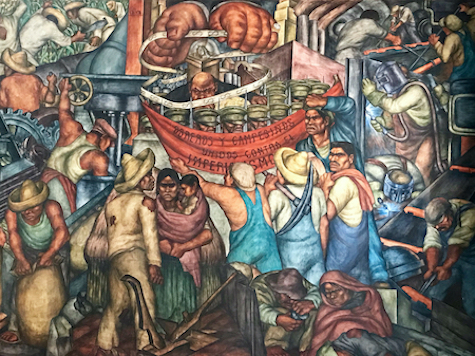
Ángel Bracho (1911–2005), one of the founding members of the TGP and a highly-regarded engraver, remained a TGP member for fifty years. In 1935, he worked on the Mercado Abelardo L. Rodriguez murals in Mexico City, which would eventually cover 1450 square meters, a project under Rivera’s leadership. Many artists worked on the famous market murals, including Pablo O’Higgins (1904–1983), Isamu Noguchi (1904–1988), Marion Greenwood (1909–1970), and others. Bracho is also credited with having found the hand press at a street stall that would produce the TGP’s lithographs. In 1953 he would illustrate a poster protesting the death sentence for the convicted Soviet spies Ethel and Julius Rosenberg. Over time, almost all the members of the TGP would become art teachers alongside their roles as activist printmakers. It was the TGP ethos that all decisions about what to commit to print would be made together, with each artist having one vote and no status given to one artist over another; all resources were shared, including tools.
The Daily Worker’s Charles Corwin devoted an entire column to the TGP exhibition. He cites Carlos Merida, Jean Charlot, Alfredo Zalce, Leopoldo Mendex. Pablo O’Higgins, David Alfaro Siqueiros, Arturo Garcia Bustos, Raul Anguiano, Roberto Beredicio, Francisco Mora, Ignacio Aguirre, and Luis Arenal of deserving of special recognition and goes on to comment:
The Tribune is showing the results of twelve years of collective effort. It is an art at once brilliant and violent and calm and serene. It calls for peace and freedom, justice and love, bread and land. Sometimes, it is biting, satiric, and full of hate and revenge, as in the rugged woodcuts of Leopoldo Méndez. Two series of his works are shown. They are sharp, angular cuttings of the uprising of the peasants in a small village. In one, a magnificent man is running with a torch; in another, a savage horse tramples on the ruins of houses. Most of the woodcuts in this series are symbolic of destruction. The last woodcut of a lone figure kneeling with his arms outstretched symbolizes hope. (Daily Worker, September 30, 1949)

A David Alfaro Siqueiros lithograph hung in the hallway of my parent’s apartment, the ceiling light casting a spotlight on it. It is an architectural structure of a man with outstretched hands. Is this hope, the possibility of deliverance? Or does the image ask: what is man’s fate? I gave this work to my son a year ago after sixty-four years in my parent’s home and eleven years in mine. The print is also in the Siqueiros collection at MoMA. Siqueiros (1896–1974), a painter, muralist, and graphic artist, is cited with Jose Clemente Orozco (1883–1949) and Diego Rivera as one of the great three muralists of Mexico. He was a formidable figure. My mother said he was a friend. I am guessing that he either gave her the print or that it was in the Tribune 1949 exhibition. Art and politics were inseparable for Siqueiros; both were a part of his life since his student days. He was a member of the Mexican Communist Party. He fought in the Spanish Civil War and, in 1940, attempted to kill Leon Trotsky (Stalin’s comrade turned enemy), who had been given asylum in Mexico.
Trotsky survived only to be assassinated by Stalin’s agent several months later. Siqueiros went into hiding. He spent four years in exile in Chile before returning to Mexico and working at the TGP. This story helps to illustrate the ferocity of disagreements on the left in these years. Stalinist followers of the party line were, shall we say, intolerant of rivals on the left. It would take a long time before many of the people my mother knew would say they had been wrong about Stalin. Some never did.
It is hardly possible to overstate just how momentous the year 1949 was. Germany had just been divided. Communists were coming to power in China. The US and the USSR were in a struggle for nuclear supremacy. The Cold War was getting hotter. The House Un-American Activities Committee was in full bloom; Oppenheimer was under scrutiny; the Hollywood Ten were black-listed, and red-baiting was common. The country was polarized. People were scared. Was America riddled with spies?

In days before the exhibition’s opening, a riot took place in Peekskill, New York, when Paul Robeson (1898–1976), the famed tenor, an African American, and a notable member of the Communist Party, rose to speak. Bernice and Ray were at the rally. Bernice would always point to a pencil drawing she did of Robeson at Foley Square, addressing a crowd, proudly asserting that “we were there” at Peekskill. The drawing is now on a wall in my brother’s home, a testament to her anti-fascist, socialist views, and especially to the issue that motivated the American left as much or more than any other was the fight against racial discrimination. To so many on the left, Robeson was a hero for speaking out with courage on all these issues.
Alexsan, the Tribune Gallery founder, had become a leader in the newly forming Republic of East Germany. Does this fact, among others, suggest that the FBI knew about the Tribune Subway Gallery and all those who were connected to it? I think it does. It was a brave choice for Bernice to unveil this show in September of 1949 because to do so was to be identified with communism at a time when being a communist carried real and serious risks. It put a target on her back. This explains why the Tribune documents remained undiscussed for decades in our basement and why my mother never told me all she lived through during this period of her life. And if that isn’t enough to explain the silence, radiation poisoning was beginning to affect my father, the result of his time as a US naval officer in Japan. The Tribune Subway Gallery and the story of its important shows went untold. Chapter closed.
In November of 1949, following the TGP show, the Tribune opened an Irving Amen (1918–2011) exhibition of woodcuts and sculpture. In January of 1950, The American Graphic Workshop exhibition was at the Tribune, featuring Antonio Frasconi (1919–2013) and Leonard Baskin (1922–2000), Charles White (1918–1979), and others to follow, suggesting that the artists of the TGP inspired American graphic artists. While Bernice remained the director of the gallery, the exhibitions focused almost exclusively on printmakers. She sold the gallery in July of 1950.
By the time I came along, Picasso’s Guernica, once rejected in Paris, New York, and Chicago, was an acknowledged masterpiece at MoMA, Cubist witness to the horrors of the Spanish Civil War. Today, it is a truism that art and politics are one, so much so that MoMA returned the painting to post-Franco Spain in 1981, despite the desire to keep this work as part of its permanent collection. I am confident that I spent as much time at MoMA as a five-year-old as I did in the park playgrounds. My mother wanted to be there, and she took me, to be surrounded: to dance with Matisse, play in Monet’s garden, be spellbound by Rousseau. I knew the museum’s layout by heart, and I still see it as it was then. Guernica on the third floor.
After my mother died and as I sorted through the accumulations of her lifetime, I decided to give my mother’s copy of “TGP—Mexico” to a close friend, Calvin Churchman, who, as an artist himself, had a long relationship with Mexico and to whom I could entrust with this treasure. Several years later, he asked: “Do you want a tour of the murals your mother saw in 1949?” Of course! I flew to Mexico City to go walkabout with him. First stop: the murals located in the working-class neighborhood adjacent to the historic district. The colorful murals in the Alberto J. Rodriguez market were the same as they ever were, commanding attention on a wall: above a taco stand, alongside a staircase, in an alcove. Today “TGP Mexico,” due to many twists and turns, lies in a box in a storage locker in Chicago. One day, the book will emerge again as a testament to the artists of the TGP and to the Tribune Subway Gallery.